AMD Rejects Warranty Claim for Swollen Ryzen 9 7950X3D – Owner Left with Questions
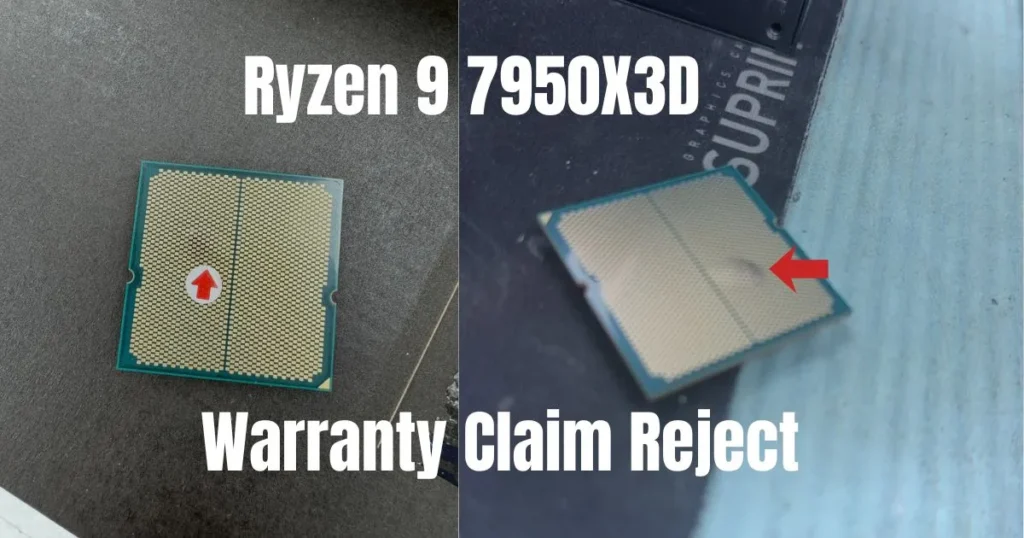
A Ryzen 9 7950X3D owner is sharing a frustrating warranty experience after AMD rejected a claim for a visibly swollen CPU. The processor reportedly failed while the system was idle, not during gaming, BIOS updates, or manual tuning.
According to the owner, the system was built in May 2023 using a Gigabyte X670E AORUS MASTER motherboard, Kingston Fury Beast DDR5-6000 memory, and a be quiet! Dark Power 13 1000W Titanium power supply. EXPO (AMD’s memory overclocking profile) was enabled, but the owner says no manual CPU overclocking or manual SoC voltage adjustments were applied.
The Failure and Aftermath
On April 28, 2026, the system reportedly shut down after a loud pop sound and would no longer boot. The owner sent the motherboard and CPU for inspection. Gigabyte later reported that the motherboard had corrupted BIOS data. The board was reflashed, the CPU socket pin alignment was adjusted, and it passed voltage checks and over 64 hours of stress testing with a different Ryzen 9 7950X3D and matching memory.
The CPU itself was submitted through the local warranty channel, but the claim was rejected due to “visible human-caused damage.” AMD later reviewed photos of the processor and noted swelling on the back of the substrate, reiterating that physical damage is not covered under warranty. The owner claims AMD made this determination from photos alone, without physically inspecting the CPU.
Context: The 2023 AM5 Voltage Issue
The timing of the build (May 2023) is significant. During the launch of Ryzen 7000X3D processors, some motherboards applied excessive SoC voltage, leading to CPU failures. AMD responded by releasing AGESA firmware updates that capped SoC voltage at 1.3V and urged users to update their BIOS. The owner’s original BIOS version is no longer known because the board was reflashed, so it’s unclear whether the system was running an older, vulnerable BIOS.
While the older issue does not prove the cause of this specific failure, it is relevant because the system was assembled during that early AM5 BIOS period.
Also, Read
- AMD FSR 4.1 May Skip RDNA 3.5 Integrated Graphics, Leaving Laptops and Handhelds in Limbo
- NVIDIA RTX Spark Laptop Pricing Leaks: N1X Systems Could Start Above $2,899
- Radeon RX 9070 GRE Struggles in Germany as Pricing Matches Faster RX 9070
What This Means for Ryzen Owners
This case highlights the growing difficulty of warranty claims when physical damage – even subtle swelling – is visible. AMD’s stance is that physical damage voids the warranty, regardless of whether the user overclocked or followed safe practices. Uniko’s Hardware, which covered the story, advises users to always update their BIOS to the latest version to minimise voltage‑related risks.
For the owner, the outcome is a costly lesson: even a seemingly idle system can fail, and AMD’s warranty process may rely on visual inspection without deeper analysis. As always, keeping BIOS up‑to‑date and documenting system stability may help, but there are no guarantees.
Source: Reddit, unikoshardware