ASRock Unveils Entry-Level RDNA 4 GPU: The Radeon RX 9050
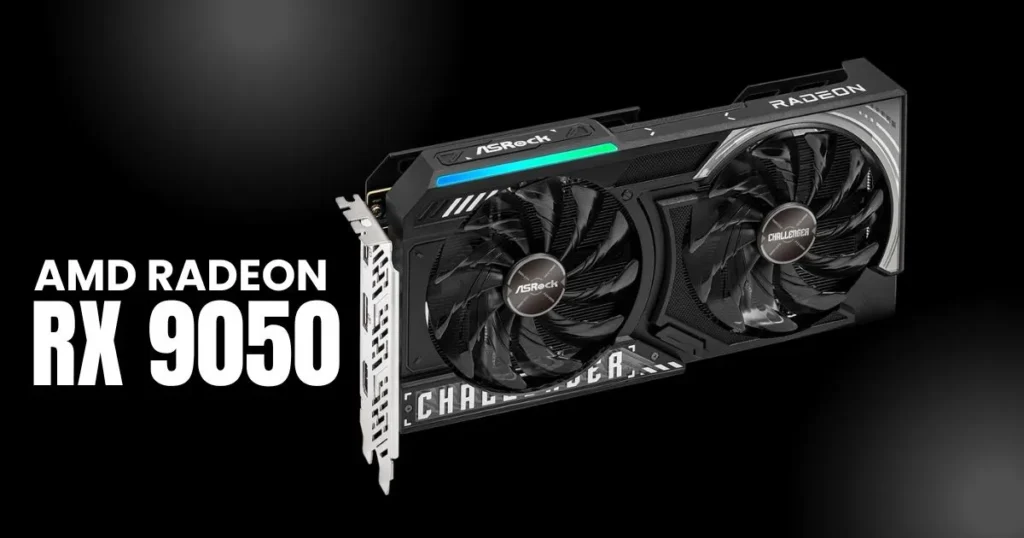
ASRock has officially listed the Radeon RX 9050 Challenger on its website, confirming the specifications of AMD’s most affordable RDNA 4 desktop graphics card. The new GPU arrives in two variants: an 8GB model for retail and a more cut-down 4GB version for OEM systems.
A Different Beast Than Initially Expected
Earlier leaks suggested the RX 9050 would feature 2,048 stream processors. However, ASRock’s final specifications confirm a more modest 1,024 stream processors (16 Compute Units). This puts the card at exactly half the compute power of the Radeon RX 9060 XT. The GPU operates with a 1,920 MHz game clock and a boost clock of up to 2,600 MHz.
Two Distinct Memory Configurations
The differences between the two versions go beyond just memory capacity:
- RX 9050 8GB (Retail): Features 8GB of GDDR6 memory on a 128-bit bus, delivering 288 GB/s of bandwidth.
- RX 9050 4GB (OEM): Comes with 4GB of GDDR6 memory on a heavily cut-down 64-bit bus, resulting in just 144 GB/s of bandwidth.
Both variants utilize the same dual-fan cooler, measure 249 x 132 x 41 mm, weigh 645 grams, and require a single 8-pin power connector. ASRock recommends a 450W power supply.
Also, Read
- AMD Unveils 6th Gen EPYC 9006 “Venice”: Up to 256 Zen 6 Cores, 1.15GB L3 Cache, and PCIe 6.0
- Japanese Amazon Buyer Orders One Core i5-14400, Receives Five—and Returns the Extras
- AMD Ryzen 7 7700X3D Drops to $279.99 Just Two Days After Launch
Pricing and Availability
AMD has not yet announced an official global MSRP for the RX 9050. However, reports indicate the 8GB model is launching with a suggested price of $279 USD. This positions it as the most affordable entry point into the RDNA 4 lineup.
The 8GB card is expected to be available starting July 31 in Asia-Pacific, Japan, and Latin America. A 4GB variant has already appeared in a CyberPowerPC pre-built system for under $890.
While the 8GB version offers a viable entry-level option for 1080p gaming, the 4GB variant’s 64-bit memory bus and limited capacity raise serious questions about its viability for modern gaming in 2026.
Source: asrock