A New Type of RTX 5090 Failure Emerges
The saga of the NVIDIA GeForce RTX 5090 has taken another dramatic turn. While the community has become all too familiar with stories of melted 16-pin power connectors, a new report details a failure that points to a different, and potentially more insidious, problem.
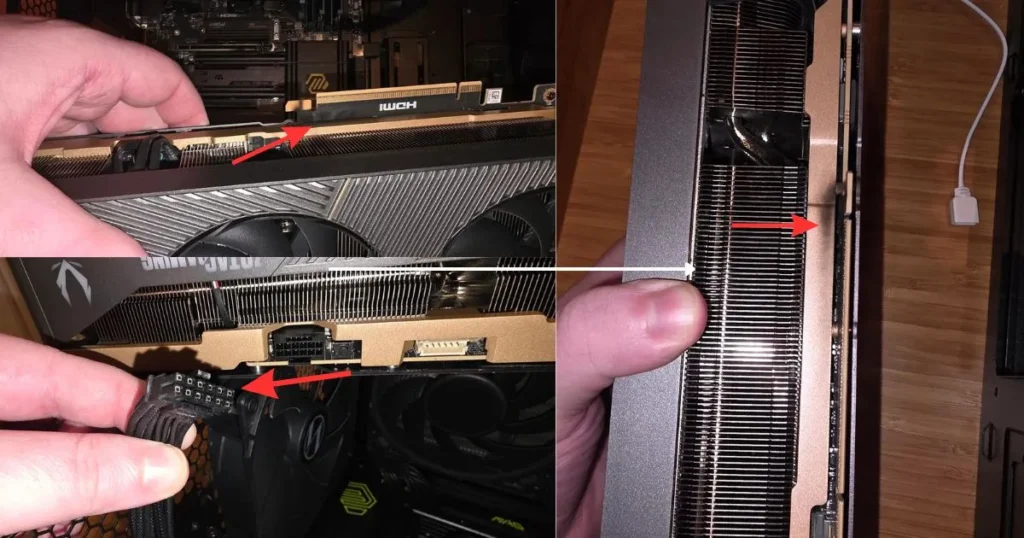
A Reddit user, posting on the r/pcmasterrace subreddit, detailed a catastrophic failure of their ZOTAC GeForce RTX 5090 SOLID graphics card. The incident occurred roughly five minutes into playing Assassin’s Creed Black Flag Resynced, a recently released title. According to the user, the card emitted a loud pop and crackling sounds, followed by a large cloud of smoke, before the system shut down completely.
A Failure in a New Location
What makes this case stand out is the location of the damage. In a departure from the now-commonplace stories of melting 12V-2×6 power connectors, the 16-pin connector on the ZOTAC card remained completely intact and undamaged. Instead, the visible burn marks and damage were concentrated around the PCIe interface—specifically, on the card’s gold fingers and the motherboard’s primary PCIe slot. The system used an MSI MAG X870E Tomahawk motherboard, which itself may have sustained damage.
The card had reportedly been operating without issues for about a year, and the system had no recent hardware changes. The only recent change was the installation of NVIDIA’s GeForce 610.74 driver, released on July 7 with support for Black Flag Resynced. However, there is currently no evidence to suggest a link between the driver and the hardware failure.
The Leading Theory: Weight and Wear
With the power connector ruled out, the hardware community has turned its attention to other potential causes. The leading theory points to the immense physical weight of high-end RTX 5090 cards. The ZOTAC RTX 5090 SOLID is a large and heavy graphics card, and over time, its weight can cause the PCB to flex or sag within the PCIe slot.
This repeated, long-term stress can lead to micro-cracks forming in the PCB, particularly near the PCIe connector, which is a major stress point. The user did have an anti-sag support bracket installed, but it was only contacting the rear corner of the card, which may have been insufficient to fully prevent the board from flexing. A crack could have eventually caused a short circuit, leading to the dramatic failure.
Also, Read
- AMD Zen 6 “Medusa Point” 10-Core APU Leak Shows Massive Performance Leap -Even at Just 2.0 GHz
- Seasonic PSU Calculator Lists RTX 5080 SUPER, 5070 Ti SUPER, and 5070 SUPER with Power and VRAM Specs
- NVIDIA GeForce RTX 3060 12GB Returns to Newegg at $329
A New Concern for High-End GPU Owners
This incident marks a significant shift in the types of failures being reported for the RTX 5090. While the melting connectors seemed to be an issue with the power delivery standard, this case points to a potential weakness in the physical design and construction of these massive cards. If a PCB crack from long-term sag is the confirmed cause, it would be a major concern for all owners of heavy, high-powered GPUs, as even proper installation may not fully prevent long-term stress.
The owner has now initiated the RMA process with ZOTAC to determine the exact cause of the failure. For current RTX 5090 owners, this serves as a crucial reminder to not only ensure their power connectors are secure but also to invest in a high-quality, properly positioned anti-sag bracket to support the full length of their graphics card.
Source: Reddit, UNIKO’s Hardware