GPU Prices Keep Climbing With No End in Sight
Graphics card prices have increased for the third consecutive month, according to the latest retail pricing analysis from Hardware Unboxed. The October survey shows an average increase of 10% compared to September, excluding the GeForce RTX 5090. Including NVIDIA’s flagship pushes the monthly increase to 11%.
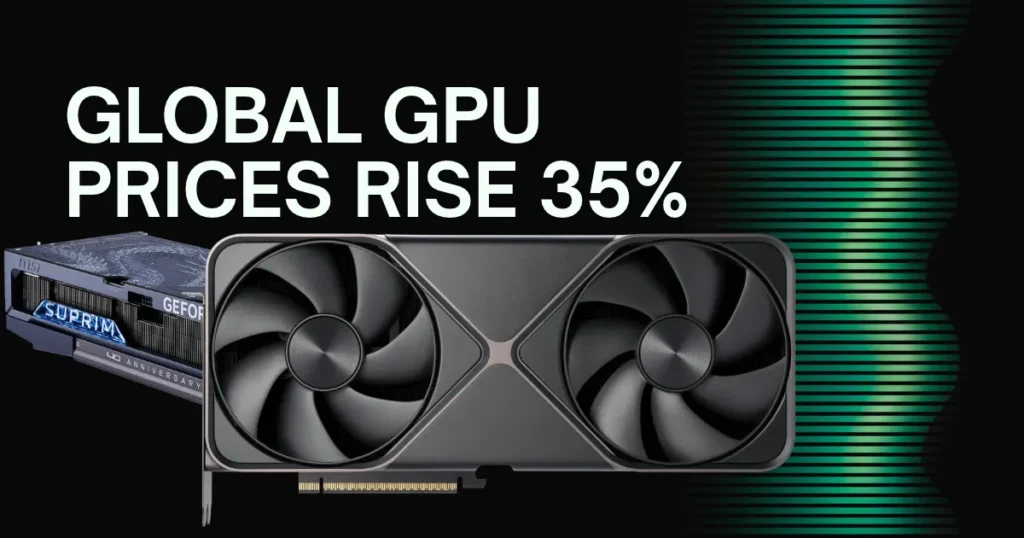
The October jump follows a 7% rise in September and a 15% increase in August. Combined, these three months have pushed graphics card prices approximately 35% higher than they were just a quarter ago. The survey covers ten countries, including the United States, Germany, the United Kingdom, Canada, Australia, and Poland, tracking the cheapest in-stock models rather than averaging across all board partner designs.
RTX 5090 and RTX 5080 Lead the Surge
The GeForce RTX 5090 recorded the largest monthly increase at 32% across the surveyed markets. The cheapest available model in the United States now costs $9,400, compared to $6,890 in September. German prices rose from €5,640 to €8,000, while Polish prices reached 38,000 PLN.
The GeForce RTX 5080 also became significantly more expensive, recording a 22% average increase in just one month. In the United States, its lowest available price jumped from $1,580 to $2,200, a 39% rise. German pricing reached €2,100, up 40% from September. Hardware Unboxed also noted limited RTX 5080 availability at some retailers, suggesting supply constraints are contributing to the price pressure.
AMD and Intel Are Not Immune
AMD graphics cards are following the same trend. The Radeon RX 9060 XT 16GB increased by 17% globally, while the RX 9070 and RX 9070 XT both recorded 12% increases. The Intel Arc B580 also rose by approximately 10%, though pricing varies between countries. The data shows that the price surge is no longer limited to NVIDIA’s high-end offerings—it has spread across the entire Graphics Card market.
Average Prices Now 44% Above MSRP
Hardware Unboxed estimates that graphics card prices are now 44% above their launch MSRP on average, excluding the RTX 5090. The calculation adjusts US launch prices for currency conversion and local taxes. Canada and the United States have the highest premiums at 58.3% and 57.6% respectively. Germany stands at 45.3%, while Poland reaches 43.1%.
Notably, Radeon prices increased faster than GeForce prices this month when excluding the RTX 5090, indicating that AMD’s offerings are not providing the value escape they once did.
Also, Read
- NVIDIA “Unlaunches” GeForce RTX 5090 from Its Marketplace as Supply Dries Up
- NVIDIA GPU SPEEDO Values Now Available as ASIC Quality Percentages in HWiNFO
- Amazon Customer Reportedly Receives Ryzen 9 9950X3D2 with an Intel CPU Underneath
A Bleak Outlook for Black Friday
Hardware Unboxed ended its video with a stark warning: there is “no light in the tunnel.” The publication predicts that this year’s Black Friday deals will be among the worst in recent memory. With prices rising across every major vendor and supply showing no signs of stabilizing, consumers hoping for discounts may be disappointed.
For PC builders, the message is clear: if you need a new graphics card, waiting for a better deal may not pay off. The market is trending in the wrong direction, and the factors driving prices higher—memory costs, AI demand, and constrained supply—show no sign of easing.
Source: Hardware Unboxed