AMD’s Zen 6c Architecture Flexes Its Muscles in Early Benchmark
AMD’s upcoming Zen 6 architecture has made an early appearance in a Geekbench 7 comparison, and the results suggest a meaningful generational leap. According to data shared by hardware leakers HXL and 326powah, an AMD EPYC 9996 processor—based on the denser Zen 6c core design—scored 2,847 points in the single-core test. A Ryzen 7 9700X, representing the current Zen 5 generation and running at a nearly identical 4.1 GHz clock, scored 2,444 points. That gives Zen 6c a 16.5% advantage in the overall single-core score.
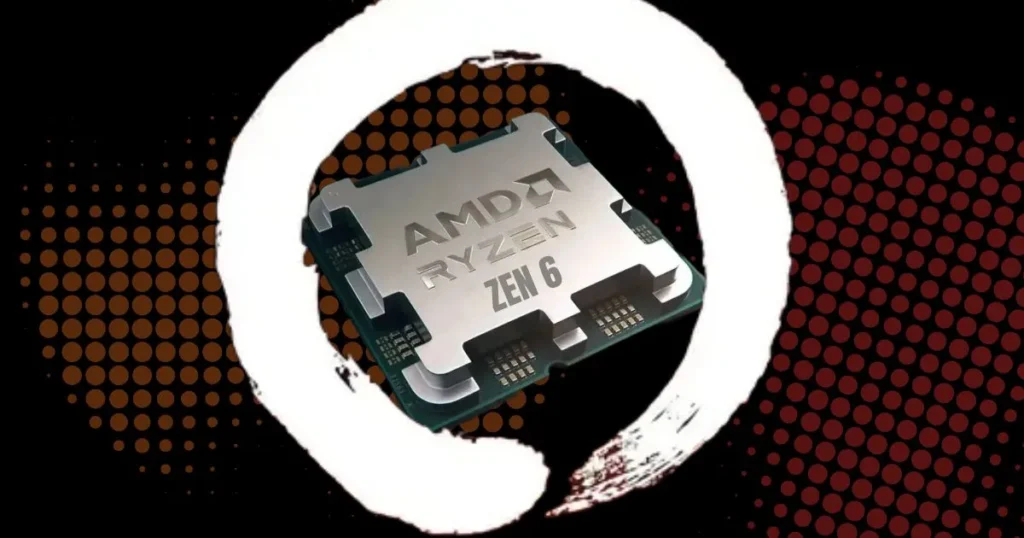
The EPYC 9996 is a 256-core, 512-thread server processor with up to 4.1 GHz clocks and a massive 1 GB of L3 cache. It was tested in a Dell PowerEdge R9815 server running Linux with Geekbench 7.1.0 using AVX2 instructions. The comparison system used a Ryzen 7 9700X with a fixed 4.1 GHz clock, DDR5-6000 CL34 memory, automatic secondary timings, and a 2,000 MHz FCLK, running CachyOS Linux. By matching the CPU frequency, the test attempts to isolate architectural improvements from clock speed differences.
Gains Across the Board
The Zen 6c chip was faster in all 15 individual single-core workloads. The largest improvements were recorded in HTML5 Browser (+25.7%), Photo Editor (+24.8%), Structure from Motion (+23.9%), and Video Player (+23.6%). Even the smallest gains—File Compression (+8.2%) and Clang (+8.6%) —are notable for a single-generation architectural update.
A second comparison shared by HXL pits the EPYC 9996 against the Zen 5-based EPYC 4545P. The latter scored 3,064 points while operating at approximately 5.45 GHz. The Zen 6c processor achieved around 93% of that score at just 4.1 GHz. When normalized by frequency, this suggests roughly 23% higher performance per GHz for Zen 6c, though the processors were tested at different clock speeds and on different platforms.
Important Caveats
It’s crucial to note that the EPYC 9996 uses Zen 6c cores, not the standard Zen 6 cores expected in desktop Ryzen processors. Zen 6c is a density-optimized design for servers, with different cache arrangements, memory configurations, and platform characteristics. Matching CPU frequencies reduces one variable but does not make these results a direct measurement of architectural IPC improvements for desktop chips.
Still, this is one of the first public comparisons showing how Zen 6c performs against Zen 5 in the same benchmark version. How these results translate to standard Zen 6 desktop processors—especially in gaming workloads—remains to be tested. For now, the data points to a solid generational uplift that should benefit both server and consumer products when Zen 6 arrives.
Also, Read
- NVIDIA Reportedly Discontinuing RTX 5090, GB202 GPUs Reserved for RTX PRO Series
- ASUS Promotes ProArt RTX Spark Mini-PC for Gamers, Claims 100+ FPS at 1440p
- Steam Hardware Survey: RTX 5070 Becomes Most Popular GPU, 32GB RAM Overtakes 16GB
What This Means for the Future
AMD has confirmed that Zen 6 will power its next-generation EPYC server chips and is also expected to arrive in desktop Ryzen processors (codenamed Olympic Ridge) in the coming years. If the Zen 6c results are any indication, users can expect meaningful single-threaded performance gains, which remain critical for gaming, productivity, and responsiveness. The 16.5% uplift at the same clock speed is a promising sign that AMD is not resting on its laurels.
As always, these early benchmarks should be treated with caution until independent reviews of retail products are available. But the direction is clear: Zen 6 is shaping up to be a worthy successor to Zen 5.