DLSS 5 Pushes the RTX 5090’s Power Connector to the Brink
DLSS 5, NVIDIA’s next-generation neural rendering technology, promises stunning visual fidelity. But a new test from Korean outlet QuasarZone reveals a troubling side effect: it can push the RTX 5090’s 16-pin power connector to temperatures that approach the limits of safety.
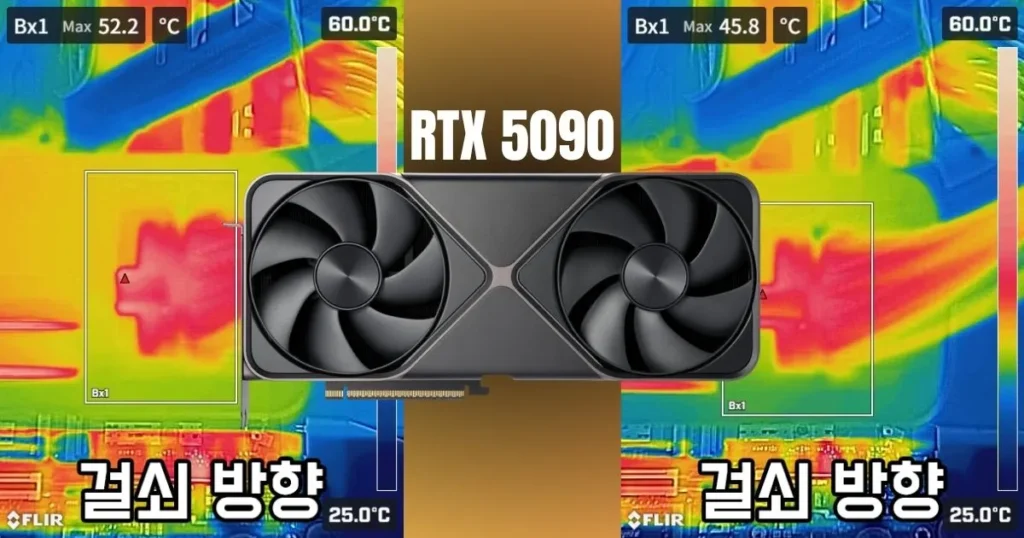
The test focused not on image quality, but on power consumption, GPU temperatures, and—crucially—the temperature of the 12V-2×6 connector itself. The results are eye-opening.
The Connector Becomes the Hottest Component
In Cyberpunk 2077 running at 4K with DLSS Quality and the Ultra preset, the RTX 5090 Founders Edition reached 91.7°C at the 12V-2×6 connector with DLSS 5 enabled. Without DLSS 5, that figure was 80.9°C. The test ran for 20 minutes in a room kept at 27.5°C ±0.5°C.
Using a thermal camera, QuasarZone measured both sides of the connector. On the side facing the four sense pins, temperature rose from 80.9°C to 91.7°C. On the latch side, it increased from 77.1°C to 83.4°C. For context, the RTX 5080 FE stayed far cooler, reaching only 48.6°C and 52.2°C from the same two directions with DLSS 5 enabled.
Perhaps most striking is that the connector became the hottest measured part of the RTX 5090 during the test. The GPU core itself averaged 83.0°C and peaked at 86.3°C—significantly cooler than the power connector.
Power Draw Closes In on the Limit
The temperature increase is a direct consequence of higher power consumption. According to HWiNFO, the RTX 5090’s average power draw rose from 509.2W to 575.1W after enabling DLSS 5. The RTX 5080 increased from 298.2W to 350.3W. Both cards were operating close to their respective 575W and 360W power limits.
External PCAT measurements, which capture short power spikes, showed even higher figures. Total RTX 5090 power increased from 527.3W average and 582.5W peak to 593.9W average and 658.0W peak. Looking specifically at the 16-pin input, the RTX 5090 reached 582.7W average and 646.7W peak, compared with 516.5W average and 571.7W peak without DLSS 5.
Per-Pin Current Approaches the Limit
The test also examined current through each individual power pin using an ASUS ROG Astral RTX 5090 limited to the same 575W. Without DLSS 5, the six pins carried between 6.94A and 7.47A. With DLSS 5 enabled, this increased to between 7.83A and 8.51A. All six pins remained below the 9.2A specification, but there was a notable 0.7A difference between the highest and lowest pins—a sign of uneven load distribution.
QuasarZone then calculated a theoretical worst-case scenario: what happens if one pin stops carrying current entirely due to wear or a poor connection? With DLSS 5 disabled, redistributing the lost current would put the highest pin at around 8.9A—still below spec. But under DLSS 5 load, the same scenario would push that pin to around 10.1A, exceeding the 9.2A limit.
The Cost of DLSS 5
If you’re wondering what all this extra power means for your electricity bill, the answer is: not much. Playing for two hours every day for a year with DLSS 5 enabled would cost roughly $7 to $9 in the US or €11 to €14 in the EU. The real cost, as QuasarZone wryly notes, might be “the cost of insurance, a WireView adapter and a fire extinguisher.”
Also, Read
- AMD Reportedly Prepares Ryzen 5 7500: 6-Core Zen 4 CPU with Integrated Graphics for AM5
- AMD RDNA 5 Reportedly Targets 3.1 to 3.4 GHz GPU Clocks, Up to 14% Above RX 9070 XT
- AMD Confirms Two Zen 6 Families for AM5: Olympic Ridge CPUs and Medusa1 APUs
What This Means for RTX 5090 Owners
The test confirms what many have suspected: DLSS 5 is power-hungry, and the RTX 5090’s 16-pin connector bears the brunt of that demand. While the connector remained within its current-carrying specification during the test, the margin for error is shrinking. A single worn pin or poor connection could tip the balance into dangerous territory.
For RTX 5090 owners, the advice is simple: ensure your connector is fully seated, monitor your system for stability issues, and consider upgrading to a power supply with native 12V-2×6 support if you haven’t already. DLSS 5 may look spectacular, but it’s worth keeping an eye on your power delivery.
Source: quasarzone