AMD FSR 4.1 Faces an Uncertain Future on RDNA 3.5 Chips, Sparking Concern for Laptop and Handheld Owners
AMD’s rollout of its next‑generation AI upscaling technology, FSR 4.1, has taken a confusing and controversial turn. While the company recently confirmed the feature would come to older discrete graphics cards (Radeon RX 7000 in July 2026 and RX 6000 in early 2027), the status for many of its newest integrated GPUs is now in doubt.
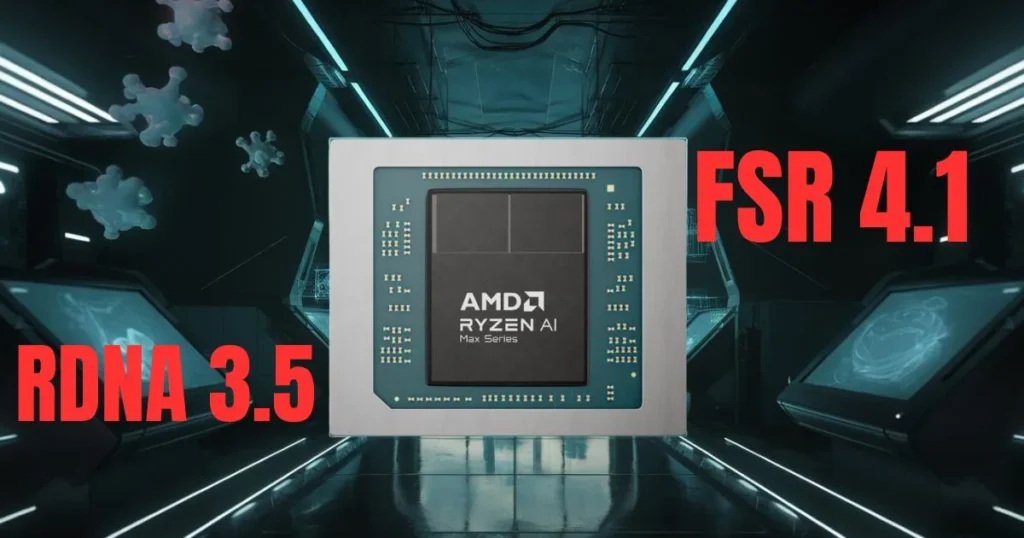
Reports indicate that AMD may not bring FSR 4.1 to its RDNA 3.5‑based integrated graphics, the engine powering the latest Ryzen AI 300 and 400 series processors. This has triggered a wave of concern among users of modern gaming laptops and handheld consoles, and even drawn a sharp response from an AMD executive.
The Hardware to be Excluded
If the decision stands, it would affect a huge range of modern chips. The processors at risk include the Ryzen AI 300 series (Strix Point) and Ryzen AI 400 series (Krackan Point), along with their successors. These chips feature integrated Radeon GPUs such as the 890M, 880M, 860M, and 840M.
Crucially, the advanced Radeon 8050S and 8060S graphics found in the high‑performance Strix Halo and Gorgon Halo mobile chips would also be left without support. This means that many of AMD’s most powerful integrated graphics solutions, designed for demanding creative workloads and even gaming, might miss out on the latest upscaling technology.
Mixed Signals from AMD
The confusion stems from contradictory statements from top AMD executives. During Computex 2026, AMD’s Corporate Vice President, David McAfee, told German hardware site Hardware Luxx that the company currently has “no plans” to support FSR 4.1 on RDNA 3.5, and that the decision is leaning towards a firm “no”.
However, this claim was quickly countered by Frank Azor, AMD’s Chief Architect of Gaming Solutions and Marketing. Azor took to social media platform X to push back against the reports, stating that “no such decision as being reported… has been made”. He emphasized that AMD is “listening to our customers” but did not promise support, leaving the door open for potential future inclusion.
Impact on Handhelds and Portable Devices
This issue is particularly acute for the rapidly growing Windows handheld gaming market. Devices like the ROG Ally X and other portable consoles, which rely on these very RDNA 3.5 APUs for their performance, could be the hardest hit.
In a striking contrast, Intel is aggressively pushing its own AI upscaling, XeSS 3, for its Arc G3 and G3 Extreme chips, which are specifically designed for portable devices. With Intel offering a full AI upscaling suite for its mobile chips, leaving RDNA 3.5 without support would put AMD’s platform at a significant competitive disadvantage in the battery‑efficient performance market.
Why the Hold Up?
From a purely technical standpoint, restricting FSR 4.1 seems puzzling. Independent tests have shown that Strix Halo chips can run the INT8 version of FSR 4.1 without any major issues, often even without needing third‑party mods. RDNA 3.5 is itself an efficiency‑optimized evolution of RDNA 3, and the underlying hardware differences are minimal, suggesting there is no major technical barrier.
Also, Read
- Radeon RX 9070 GRE Struggles in Germany as Pricing Matches Faster RX 9070
- AMD Keeps AM4 Alive with Ryzen 7 5800X3D 10th Anniversary Edition, Launching June 25 at $349
- AMD Ryzen 7 7700X3D Launches July 16 for $329: 8 Zen 4 Cores, 96MB L3 Cache
This suggests the current “no plan” stance might be a business decision rather than a technical one. With the official launch of FSR 4.1 for RDNA 3 desktop GPUs set for July, the window for AMD to clarify its position on RDNA 3.5 is rapidly closing. For now, owners of modern AMD laptops and handhelds are left hoping that Frank Azor’s assurance that no final decision has been made means support will eventually come.
Source: hardwareluxx