The Witcher 4 is shaping up to be more than just a continuation of Geralt’s legacy. According to new insights from CD Projekt Red, the highly anticipated RPG will represent a generational leap forward, leveraging Unreal Engine 5 and a new protagonist to create an experience that feels fundamentally distinct from its predecessor.
The Unreal Engine 5 Revolution
The most significant change is under the hood. CDPR has abandoned its proprietary REDengine in favor of Unreal Engine 5, a decision that developers describe as transformative. In the AnsweRED podcast, the studio praised the engine as a “playground” for artists and designers, noting that tasks which once took hours now take minutes. This efficiency allows for unprecedented attention to detail.
A striking example: an NPC on crutches will have a completely unique set of animations informed by their impairment, rather than simply being a standard NPC with a visual quirk. This level of granularity extends to the game’s world design, motion capture, and overall fidelity, promising a level of immersion that simply wasn’t possible in The Witcher 3.
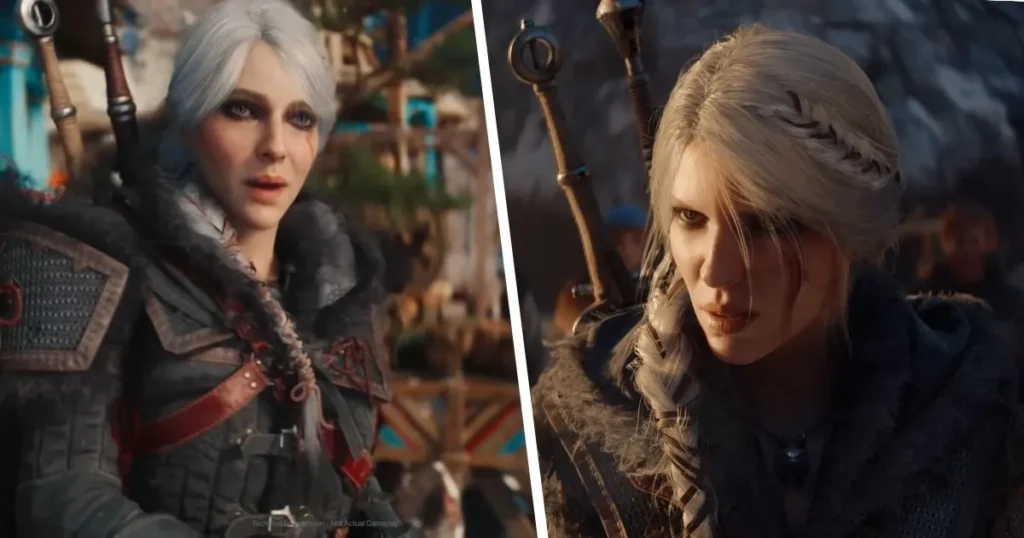
Ciri: A Different Kind of Force
While Geralt was a measured, methodical fighter, Ciri brings a completely different energy to combat. CDPR has already teased key differences: Ciri can cast spells while moving and can even jump during fights—two things Geralt was incapable of in his games.
As an acrobatic fighter with unique powers, Ciri is designed for speed and fluidity. She underwent the Trials of the Grasses between The Witcher 3 and the new game, potentially making her even faster and more reactive than before. The result is a combat system that prioritizes agility and mobility over the more deliberate, sign-based tactics of Geralt’s era.
Also, Read
- The Witcher 3 New DLC Gets Exciting Launch Window Update
- New Witcher 4 Details Revealed – Ciri’s Combat, 80+ Animations, and an All-Star Team
- New Official The Witcher Game Drops Today, Geralt Returns
Lessons from Cyberpunk 2077
CDPR’s journey through the troubled launch of Cyberpunk 2077 has clearly influenced The Witcher 4‘s development. The studio has repeatedly emphasized a “console-first” approach to avoid the optimization issues that plagued its previous release. More broadly, the lessons in world design, quest structure, and narrative density from Cyberpunk are being carried forward.
While CDPR cautions against over-hype—a lesson learned the hard way—the studio’s commitment to quality is evident. The goal isn’t just to make The Witcher 4 look good; it’s to create a world where every detail, from an NPC’s gait to Ciri’s combat fluidity, feels intentional and immersive.
The White Wolf’s saga ended in Toussaint. Ciri’s story begins somewhere entirely new—and it will feel like it.