The Witcher IV Taps NVIDIA’s RTX Mega Geometry to Render Million-Particle Forests
The next installment in the legendary Witcher franchise is shaping up to be a graphical tour de force. During the Game Developers Conference (GDC) 2026, NVIDIA announced that The Witcher IV will feature its advanced RTX Mega Geometry technology, marking a significant milestone in the collaboration between the GPU giant and CD PROJEKT RED.
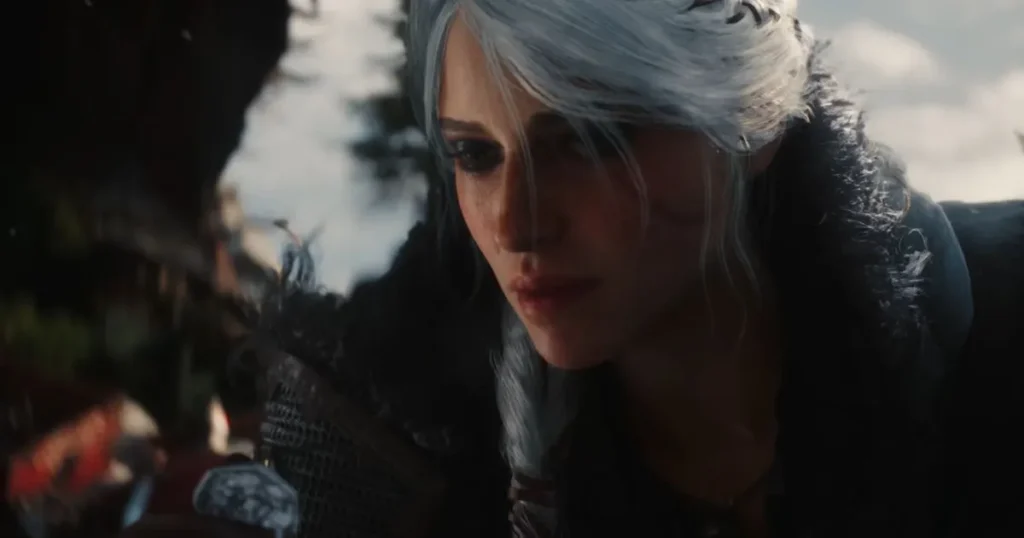
NVIDIA confirmed it has been working with the Polish studio “since the beginning of the game’s development,” ensuring that when The Witcher IV eventually ships, it will launch with the latest RTX-powered technologies. This partnership extends beyond mere marketing—it represents deep technical integration aimed at solving one of ray tracing’s biggest challenges: rendering dense, complex environments efficiently.
What Is RTX Mega Geometry?
RTX Mega Geometry is designed specifically for ray-traced scenes with extreme geometric complexity—precisely the kind of lush, detailed open worlds the Witcher series is known for. Traditional rendering pipelines struggle when scenes contain millions of individual objects like leaves, branches, and grass blades, each requiring ray-traced lighting calculations.
NVIDIA’s solution clusters millions of triangles into compressed groups and caches them over multiple frames, intelligently reusing data as the player traverses the world. The system partitions the top-level ray-tracing structure and selectively updates only the partitions that make sense each frame, dramatically reducing computational overhead.
For The Witcher IV, this capability is paired with Opacity Micromaps, which help rays see through complex objects like leaves more efficiently. Combined, these technologies allow high-fidelity path-traced assets to run at game-ready performance—something previously difficult to achieve in dense forest environments.
Real-World Performance Gains
The technology isn’t theoretical. Alan Wake 2 became the first game to implement RTX Mega Geometry in January 2025, delivering a 5-20% performance boost while saving approximately 300 MB of VRAM in ray-traced scenes. For a game like The Witcher IV, where forests can contain hundreds of millions of individual geometry elements, the efficiency gains could be transformative.
NVIDIA claims RTX Mega Geometry can be up to 100 times more efficient than traditional rendering approaches in certain scenarios. This efficiency allows developers to push scene complexity far beyond current limits without requiring brute-force GPU scaling.
Built on Unreal Engine 5
The Witcher IV is being developed on a modified version of Unreal Engine 5, and the project has already served as a technical showcase for Epic’s engine work. The game was featured in Unreal Engine 5.6 presentations focused on large open worlds, faster geometry streaming, and dense ray-traced scenes.
The reveal trailer, shown in 2024, was pre-rendered in a custom Unreal Engine 5 build on an NVIDIA GeForce RTX GPU. This deep integration across both Epic’s engine and NVIDIA’s RTX stack positions The Witcher IV as a flagship example of next-generation open-world rendering.
What This Means for Players
For gamers, the technical partnership translates to tangible benefits. The dense forests that have always been a hallmark of the Witcher series can now feature exponentially more detail without sacrificing performance. NVIDIA’s demonstration included an aerial drone view of a highly detailed forest where millions of objects remained accurately lit and shadowed even at extreme distances .
The technology also reduces VRAM pressure, which has become increasingly important as games push higher resolutions and more complex assets. For players on RTX 50-series GPUs, Blackwell’s specific architectural features will accelerate RTX Mega Geometry further, though the technology runs on all RTX GPUs.
Also, Read
- NVIDIA Reportedly Resurrects GeForce RTX 3060, Taps Samsung for 8nm Production
- NVIDIA Tightens Grip with 94% GPU Market Share as AMD Falls to Just 5%
- NVIDIA Rumored to Launch GeForce RTX 5050 with 9GB GDDR7 and 96-Bit Bus
Release Timing
CD PROJEKT RED has not announced a specific release date for The Witcher IV, though industry speculation points to a launch no earlier than 2027. The game will feature Ciri as the protagonist, leading a new saga in the franchise.
What’s clear is that when it arrives, The Witcher IV will serve as a landmark title for ray-traced open-world graphics—one built from the ground up with next-generation rendering technologies in mind.
Source: NVIDIA