“Completely Wrong”: Jensen Huang Dismisses DLSS 5 Backlash, Defends Developer Control
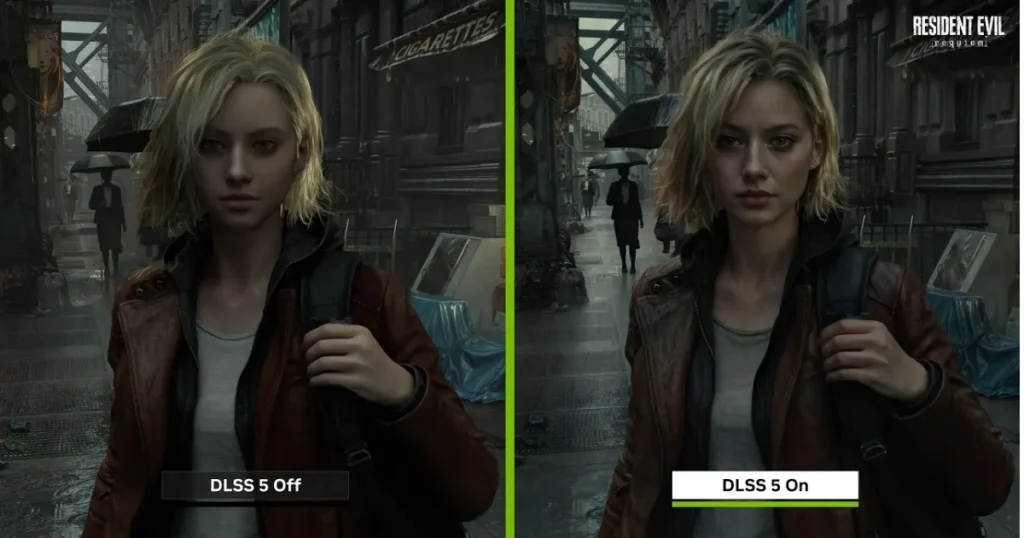
The early reaction to DLSS 5 has been anything but quiet. Within hours of NVIDIA’s GTC 2026 unveiling, social media flooded with comparisons showing character faces dramatically altered by the new neural rendering system. Memes spread. Concerns mounted. The question on everyone’s lips: was AI about to erase the carefully crafted art direction of beloved games?
Now, NVIDIA CEO Jensen Huang has responded—and he’s not mincing words.
Speaking during a press Q&A session with Tom’s Hardware at GTC 2026, Huang addressed the criticism head-on, dismissing concerns that DLSS 5 overrides artistic intent. “Well, first of all, they’re completely wrong,” he said flatly when asked about the backlash.
A Matter of Control, Not Replacement
Huang’s defense rests on a fundamental distinction he says critics are missing. DLSS 5 is not a post-processing filter applied after a frame is rendered, like a Instagram effect slapped onto a screenshot. Instead, he describes it as a geometry-level system that fuses developer-authored content with generative AI in a controlled manner.
“The reason for that is because, as I have explained very carefully, DLSS 5 fuses controllability of the geometry and textures and everything about the game with generative AI,” Huang explained.
According to NVIDIA’s CEO, developers retain the ability to fine-tune the model to match their intended art direction. The technology is designed to enhance, not replace—adding cinematic lighting, material depth, and photorealism while staying anchored to the original scene data.
Beyond Photorealism: Stylized Options Exist
Huang also pushed back against the assumption that DLSS 5 inevitably pushes games toward a uniform, photorealistic aesthetic. He suggested that studios could experiment with different looks, including stylized or non-photorealistic outputs, depending on the type of game they want to build.
The implication is that DLSS 5 is a flexible tool, not a one-way street to hyper-realism. Whether that flexibility translates into visible diversity in shipping games remains to be seen.
The Elephant in the Room: Those Faces
Despite Huang’s assurances, the demonstration footage that sparked the controversy remains hard to ignore. Side-by-side comparisons from games like Resident Evil Requiem showed character faces transformed—different enough that some viewers questioned whether the original actor’s performance was still visible.
Critics argue that NVIDIA’s messaging would have landed better if the company had focused its initial demos on environmental enhancements rather than human faces, where the “uncanny valley” effect is most pronounced and changes are most noticeable.
Gamers Have a Choice
Huang also reminded users of a simple reality: DLSS 5 is optional. Gamers who prefer the original, unenhanced look of their favorite titles can simply disable the technology in supported games. Alternatively, they can choose hardware that does not yet support these features.
This point, however, comes with a long-term asterisk. AMD recently announced its own neural rendering ambitions during the FSR Diamond reveal, suggesting that the industry as a whole is moving toward AI-assisted rendering. The choice may not remain “AI or not” forever, but rather “which flavor of AI.”
Also, Read
- NVIDIA Unveils DLSS 5 with Neural Rendering – A “GPT Moment” for Graphics Arriving This Fall
- NVIDIA’s Ambitious Vision – Future GPUs Target 1,000,000x Path Tracing Leap Over Pascal
- NVIDIA Reportedly Resurrects GeForce RTX 3060, Taps Samsung for 8nm Production
The Road Ahead
NVIDIA still has months before DLSS 5’s fall launch. The company has time to refine its messaging, and this is likely not the last discussion on the subject. As one observer noted, the showcase might have been better received if NVIDIA had led with non-human rendering—stunning environments, complex materials, atmospheric lighting—rather than presenting clearly AI-generated faces in its first demos.
For now, the debate continues. Jensen Huang has made his position clear. Whether gamers and developers ultimately agree will shape the conversation around AI in gaming for years to come.
Source: tomshardware