In a clear delineation of strategy, Intel has publicly stated it will not develop a direct rival to AMD’s high-performance Ryzen AI Max+ “Strix Halo” processors. Intel Fellow Tom Petersen, in an interview with Club386, dismissed the need for such a chip, criticizing AMD’s current integrated graphics for lacking efficiency and suggesting the high-end segment is better addressed by compact discrete graphics cards.
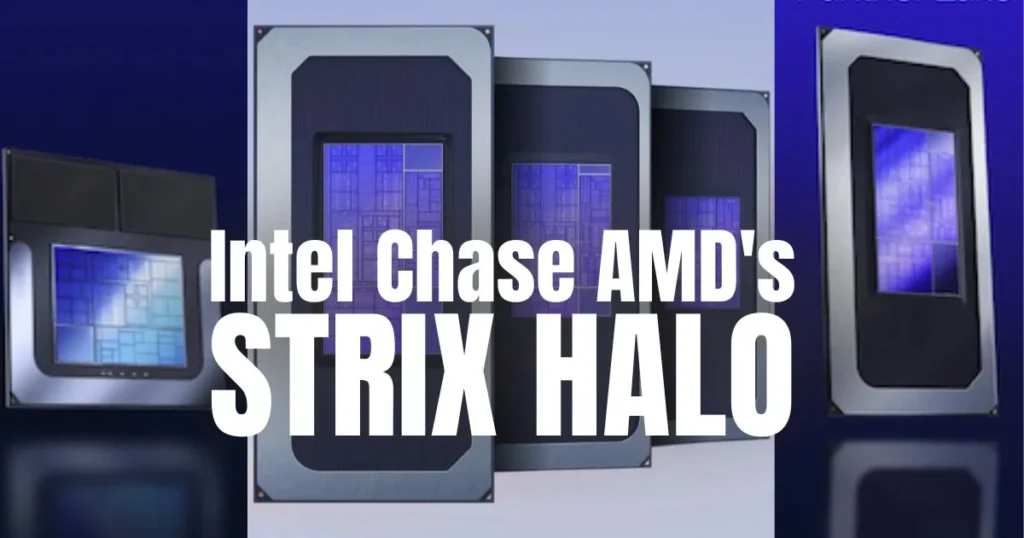
This declaration draws a sharp strategic line between the two chipmakers. While AMD pushes forward with APUs that pack desktop-class graphics power, Intel is choosing to fortify its position in the more traditional, efficiency-focused integrated graphics market for mainstream laptops.
Intel’s Stance: Power and Efficiency Over Raw Graphics Muscle
Petersen’s comments directly address AMD’s recent marketing, which positions Strix Halo’s integrated Radeon 8060S graphics ahead of Intel’s best offerings in raw performance. He reframed the competition around different metrics.
“If you look at the relative performance… it’s clear that we’re focused on integrated graphics performance, primarily for gaming,” Petersen stated. He went further, claiming an advantage in efficiency: “AMD’s current product is not that competitive, either on a power or a performance-per-watt basis… from my perspective, we’re clearly ahead.”
His core argument is that Strix Halo, with its massive 40-compute-unit GPU, essentially functions as a “discrete GPU class product.” For that segment, Petersen believes system designers and consumers would be better served by pairing a standard CPU with a small, dedicated graphics card from partners like NVIDIA or Intel itself, rather than an all-in-one APU that raises costs and thermal demands for the entire chip.
The AMD Counter-Strategy: Creating a New Category
AMD’s Strix Halo represents a different philosophy. By integrating a GPU powerful enough for 1440p gaming, AMD aims to enable a new class of ultra-slim laptops, premium mini-PCs, and handheld gaming devices that don’t have the physical space or power budget for a separate graphics card.
Interestingly, AMD initially marketed Strix Halo primarily as an “AI workhorse” for local AI tasks, downplaying its gaming potential. However, with the launch of new models at CES 2026 and more designs expected in 2026, its role as a gaming platform is coming into sharper focus. This creates a niche that Intel is now explicitly choosing to cede.
What This Means for the Market
This divergence signals two different visions for the future of mobile computing:
- Intel’s Path: Optimize for the broad market with efficient, competent integrated graphics in every laptop, leaving the high-end to discrete GPU partnerships.
- AMD’s Path: Attack the high-end of thin-and-light and specialty form factors with monolithic super-APUs that eliminate the need for a dGPU entirely.
Also, Read
- Intel’s Comeback Plan – Nova Lake CPUs Arrive Late 2026 with New Socket, Cores, and “BLLC” Cache Tech
- Intel’s “Big Battlemage” GPU May Debut in Professional Market, Gaming Future Unclear
- ASUS Retracts Statement, Now Says RTX 5070 Ti Is Not Discontinued After All
For consumers, this means more distinct choices. Gamers and creators seeking maximum graphics power in the slimmest possible notebooks will likely find their options coming from AMD’s camp. Those prioritizing battery life, lower system cost, or the flexibility to choose a separate GPU will find Intel’s ecosystem aligning with their needs. The battle lines aren’t just about performance anymore; they’re about fundamentally different definitions of what a laptop processor should be.
Source: club386