Exclusive details have emerged regarding Intel’s next move in the professional graphics market. The upcoming Intel Arc Pro B70 and B65 workstation graphics cards, based on the long-rumored BMG-G31 “Big Battlemage” GPU, will feature a substantial 32GB of GDDR6 memory on a 256-bit bus. However, while the professional variants move forward, sources indicate that a highly anticipated consumer gaming version of this powerful chip has been put on hold, dealing a blow to gamers hoping for a more competitive third option in the GPU market.
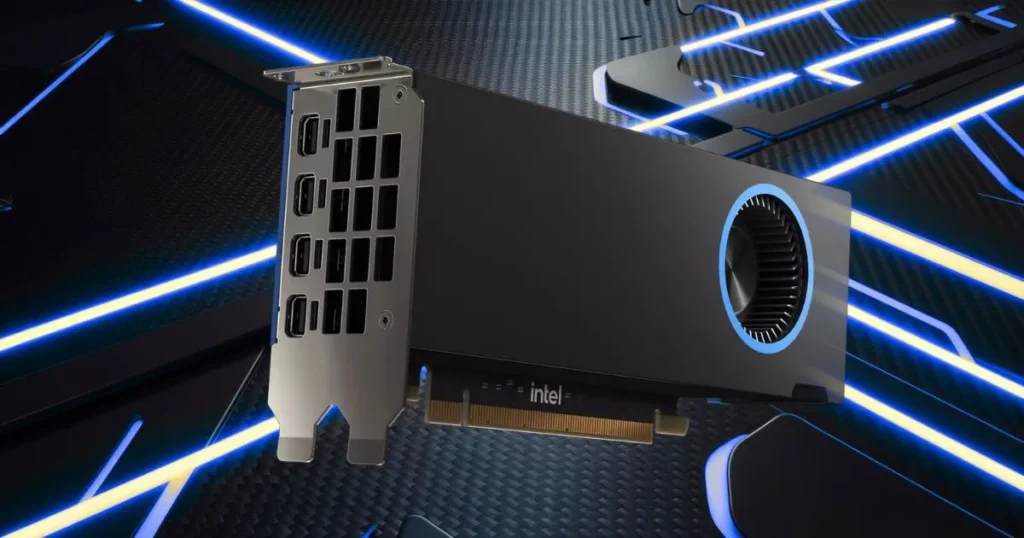
The specifications confirm that Intel is prioritizing the professional visualization segment, where high memory capacity and certified drivers are paramount, over the turbulent consumer gaming space.
Detailed Specifications: Power Reserved for Professionals
According to the new information, both the Arc Pro B70 and B65 are confirmed to use the BMG-G31 GPU die, differing primarily in their core configuration:
- Arc Pro B70: This will be the full implementation, featuring 32 Xe2 cores, which translates to 4,096 FP32 cores—the maximum configuration for the BMG-G31 die.
- Arc Pro B65: This model will utilize a partially enabled die with 20 Xe2 cores (2,560 FP32 cores), matching the core count of the current Arc Pro B60 but on the newer, larger architecture.
Critically, both cards will be equipped with 32GB of VRAM, a configuration aimed directly at professional workloads in CAD, engineering, scientific visualization, and AI development where large datasets are common.
The Missing Piece: The Gaming Card That Isn’t Coming (Yet)
The leak contains a significant and disappointing revelation for the DIY PC community: Intel has reportedly put the consumer gaming variant of the BMG-G31 GPU on hold. While board partners have the professional versions for testing, there is no active development on a triple-fan, RGB-adorned “Arc B770” gaming card.
Sources suggest the decision is strategic, possibly to wait out the volatile memory market and avoid launching a high-cost card into a crowded, price-sensitive segment. This delay risks repeating the history of the Alchemist generation, which arrived late and immediately faced next-gen competition. With each month, the window for a competitive impact narrows.
Also, Read
- Intel Won’t Chase AMD’s “Strix Halo” Super APU, Criticizes Its Efficiency
- Buyer Allegedly Receives Rocks, Not an RTX 5090, in $3,000 Amazon Resale Order
- Intel’s Comeback Plan – Nova Lake CPUs Arrive Late 2026 with New Socket, Cores, and “BLLC” Cache Tech
Strategic Focus: Workstations First, Gamers Later?
This move signals a pragmatic, if cautious, strategy from Intel. The professional market offers more stable pricing, higher margins, and a focus on software certification over raw gaming benchmarks. By debuting its most powerful silicon here, Intel can stabilize its driver stack and build credibility before potentially entering the brutal high-end gaming arena.
For now, enthusiasts hoping for a powerful Intel “Battlemage” gaming GPU to challenge NVIDIA and AMD will have to keep waiting. Intel’s “Big Battlemage” is real and powerful, but its first battlefield will be the workstation, not the game room.
Source: videocardz