The issue of melted 12VHPWR power connectors on high-end graphics cards has generated significant concern and discussion within the PC building community. However, new data from a major graphics card manufacturer suggests the problem, while serious, may be less widespread than perceived. INNO3D has revealed that its European service center has handled fewer than 15 confirmed cases of melted connectors across both the RTX 4090 and the newer RTX 5090 since late 2022.
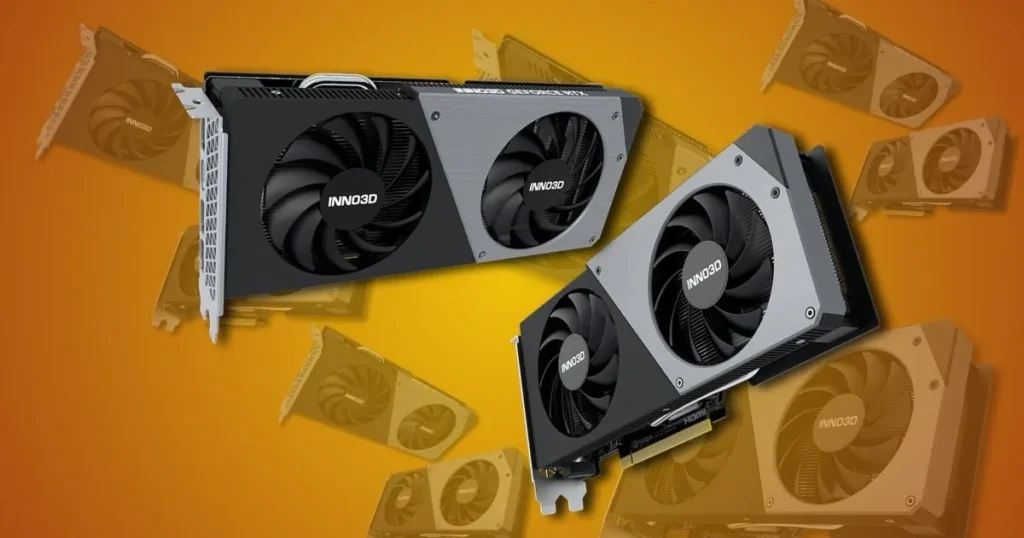
This figure offers a rare glimpse into real-world return rates from a manufacturer’s perspective, though it exists alongside a steady stream of user reports that keep the issue in the spotlight.
The Manufacturer’s Perspective: A Rare but Serious Power Connectors Failure
In a discussion on a Dutch tech forum, an INNO3D representative stated that the company’s Netherlands-based RMA hub, which serves all of Europe, has seen “under 15” melted Power connector cases total. The representative added that cards physically damaged by users are a more common sight at their service center than those with connector failures.
It’s important to contextualize this number. INNO3D noted that their support division does not have access to total sales figures, so they cannot calculate a precise failure percentage, describing the share as “just a few.” Additionally, INNO3D has a smaller market share in Europe compared to giants like ASUS or MSI, which means their absolute number of cards in circulation is lower.
Perception vs. Reality: Why the Issue Feels Pervasive
This low official count from one vendor contrasts with the persistent visibility of the problem online. New cases are reported on social media and tech forums almost weekly, keeping the issue fresh in the community’s mind. This discrepancy can be explained by several factors:
- Vocal Minority: A small number of failures in a highly engaged community can generate significant attention, especially when the consequence (a damaged $2,000 GPU) is so severe.
- Global Scope: INNO3D’s data is for Europe only. Cases in North America and Asia are handled by different service centers.
- Persistent Risk: Despite the revised 12V-2×6 connector design intended to prevent improper insertion, the fundamental challenge of safely delivering 450-600 watts through a small Power connector remains, and installation error is still a risk factor.
Other Common Issues: User Damage and Counterfeit Cards
The INNO3D discussion highlighted other common problems that actually surpass Power connector melts. The representative noted that “user-damaged cards” are more frequent. They also shared an image of a counterfeit “card” that had its GPU and memory chips completely removed, sold to an unsuspecting buyer in the second-hand market—a stark reminder of other risks in the hardware ecosystem.
Also, Read
- GPU Inflation Reaches New Peak – A Single RTX 5090 Now Costs Nearly as Much as a Complete Gaming PC
- ASUS Retracts Statement, Now Says RTX 5070 Ti Is Not Discontinued After All
- NVIDIA Reportedly Slashes GPU Supply by 20%, 2026 May See No New GeForce Cards
The Takeaway: Vigilance is Still Required
While INNO3D’s data is reassuring, it doesn’t mean the risk is zero. The consequences of a failure are extreme, so the best practice remains meticulous installation:
- Seat Firmly: Ensure the power connector is fully and firmly inserted into the GPU until it clicks.
- Mind the Bend: Maintain a straight cable run for at least 35mm (1.4 inches) out of the connector before bending.
- Inspect Periodically: Check the connection for signs of melting or discoloration, especially after the first few hours of heavy use.
The industry’s move toward monitoring solutions and revised connector designs shows the issue is taken seriously. For now, careful installation is the most effective tool any PC builder has.
Source: videocardz