That “1.1TB” HP Laptop Deal on Amazon? 1TB Disappears After a Year
A wave of laptop listings on Amazon is drawing sharp criticism for what some are calling a “borderline scam” marketing tactic. Multiple third-party sellers are advertising HP 15-inch laptops with eye-catching storage capacities like 1.1TB or 1.2TB, but the reality is far less generous.
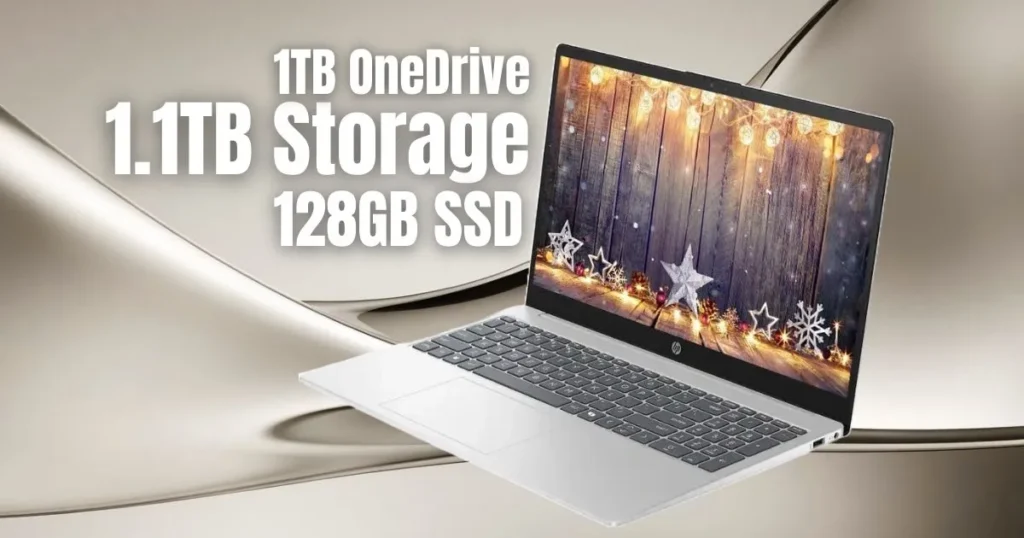
The fine print reveals that approximately 1TB of that advertised storage is actually cloud space through a one-year Microsoft 365 subscription that includes OneDrive. The laptop itself contains only a modest 128GB internal UFS drive—enough for Windows 11 and little else before users must rely on internet-dependent cloud storage.
For shoppers scanning product titles quickly, the large storage figure creates a misleading impression of the laptop’s true capabilities. And unlike physical storage, that 1TB cloud allocation vanishes when the subscription expires after 12 months unless the user begins paying.
More Than Just Storage Tricks
The deceptive practices don’t stop at storage. Some listings employ equally problematic tactics with memory specifications. One seller describes a laptop as supporting “up to 32GB RAM,” creating the impression that the unit for sale includes that much memory, when in reality the specific model comes with just 4GB—the bare minimum for Windows 11 and far from a smooth experience.
Other red flags include outdated Intel Celeron processors, 1366×768 resolution screens (extremely low for a 2026 laptop), and Windows 11 S Mode restrictions that prevent downloading software outside the Microsoft Store.
Not Just Amazon—And Not Just HP
While HP appears most frequently in these listings, the practice has spread. Multiple e-commerce platforms including Newegg and Best Buy have hosted similar offers, with third-party sellers apparently competing to see who can craft the most attention-grabbing headline.
Some sellers have become slightly more transparent after public backlash, now formatting storage as “1.1TB (1TB OneDrive + 128GB SSD)” rather than burying the breakdown. However, even this phrasing can mislead less tech-savvy buyers who simply see “1.1TB” and move on.
This laptop comes with 1.1TB of storage
— Max Weinbach (@mweinbach) March 9, 2026
128GB SSD
1TB OneDrive storage (only for a year)
This is just insane pic.twitter.com/UKkpKvaCyU
Why This Is Happening
The timing is no coincidence. An ongoing global memory shortage—driven by AI data centers consuming massive quantities of DRAM and NAND—has pushed hardware prices higher, creating a void in the ultra-budget laptop segment. Some sellers appear to be filling that void with creative marketing rather than competitive hardware.
The laptops themselves are often older stock, sometimes with user reviews from years ago artificially boosting their apparent credibility.
Also, Read
- AMD Launches Ryzen AI 400 Desktop APUs, But iGPU Tops Out at Radeon 860M
- AMD Ryzen 5 5500X3D Hits China for ~$175, Proving AM4 Still Has Plenty of Life Left
- Microsoft: Shader Execution Reordering delivers up to 90% higher performance on Intel Arc B-Series in tech demo
How to Protect Yourself
For shoppers navigating today’s laptop market, a few precautions can prevent disappointment:
- Look past the headline number. If you see an unusual capacity like 1.1TB or 1.2TB, check the detailed specifications for how that figure is calculated.
- Focus on local storage. Cloud storage is useful for backups and syncing, but it’s not a replacement for internal drive space—especially for applications, games, or offline use.
- Check RAM carefully. Ignore “up to X GB” language and find the exact configuration being sold. For Windows 11, 8GB should be considered the practical minimum.
- Verify the processor. Low-end Celeron chips struggle with modern multitasking. Look for at least an Intel Core i3 or AMD equivalent.
Some of the more egregious listings have reportedly been removed as attention has grown, but the broader practice continues. As one Reddit user put it: “I know so many people around me who would just fall for this”. In a market where every dollar counts, reading the fine print has never been more important.