For PC builders choosing between AMD Ryzen 9000 and Intel Core Ultra 200, new data suggests there’s no wrong answer when it comes to reliability. Puget Systems, a well-respected system integrator for workstations and creative professionals, has published its 2025 component reliability report. The findings reveal a statistical dead heat: AMD Ryzen 9000 series processors had a failure rate of 2.52%, while Intel Core Ultra 200 series chips were at 2.49%.
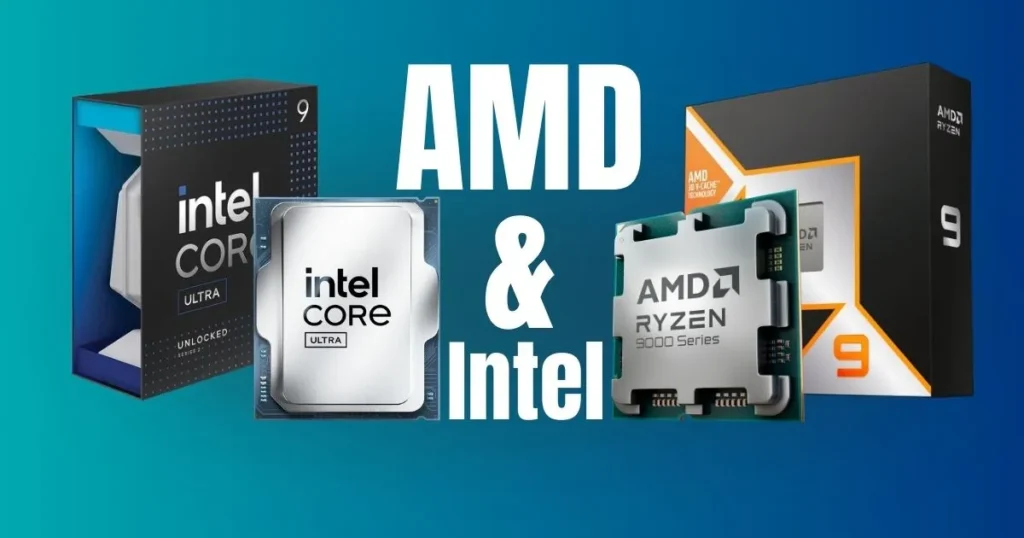
This near-identical performance indicates that both chipmakers are delivering mature, high-quality products for the desktop market, offering peace of mind regardless of brand preference.
A Closer Look at the Standout Performers
While the overall families were tied, the report highlighted two specific groups that excelled within their respective lineups. On the Intel side, the Core Ultra 7 265K proved to be an exceptionally robust chip, posting the lowest individual failure rate in the dataset at just 0.77%.
For AMD, the specialized Ryzen 9000X3D processors (like the 7800X3D and 9800X3D) collectively showed better reliability than the standard Ryzen 9000 series, with a failure rate of 1.51%. Puget Systems noted that the vast majority of these X3D failures were caught during their internal quality control before systems ever shipped to customers.
AMD & Intel CPU Price
- Ryzen 9000X3D – AMAZON
- Ryzen 7800X3D – AMAZON
- AMD Ryzen 9000 – AMAZON
- Intel Core Ultra 7 265K – AMAZON
- Intel Core Ultra 200 series – AMAZON
Context and Methodology: Why This Data Matters
Puget Systems’ data is particularly valuable because it reflects real-world results from building and testing thousands of systems for professional use. The company uses components at stock settings, avoiding the overclocking and aggressive tuning common in enthusiast builds. This provides a clear baseline for inherent product quality.
It’s important to note that these figures represent failure rates during Puget’s build and burn-in process, not long-term field failure rates. Catching a faulty CPU before it reaches the customer is a sign of rigorous testing. The report also showed impeccable reliability for workstation-class hardware, with Intel Xeon W-2500 and W-3500 CPUs experiencing zero failures in their sample.
Also, Read
- AMD’s Next-Gen RDNA 5 GPU Spotted – First Discrete Model Appears in Early Code
- AMD Claims Ryzen 7 9850X3D Makes Fast RAM Unnecessary for Gaming
- AMD Gorgon Halo APU Specs Leak – New Max+ 495 Model to Feature 5.2 GHz Boost, 3.0 GHz GPU
GPU Reliability and the Big Picture
The report wasn’t limited to CPUs. On the graphics card front, NVIDIA’s Founders Edition models led with a minuscule 0.25% failure rate, followed by ASUS (0.40%) and PNY (0.45%). Puget’s mix tends toward baseline models, so these results may differ from heavily overclocked gaming cards.
For consumers, the primary takeaway is overwhelmingly positive: building a PC with either a modern AMD Ryzen or Intel Core Ultra processor is a safe bet. The dramatic “CPU wars” of performance and pricing do not extend to fundamental reliability—both companies are delivering products that system integrators trust for mission-critical professional work.
Source: pugetsystems