In the face of an industry-wide memory crunch, AMD has publicly outlined its strategy to prevent the drastic price inflation that has plagued the GPU price. In a recent interview, company executives identified soaring DRAM costs as the single biggest threat to graphics card pricing in 2026, but pledged to leverage long-term partnerships in an effort to keep Radeon models close to their suggested retail price (MSRP).
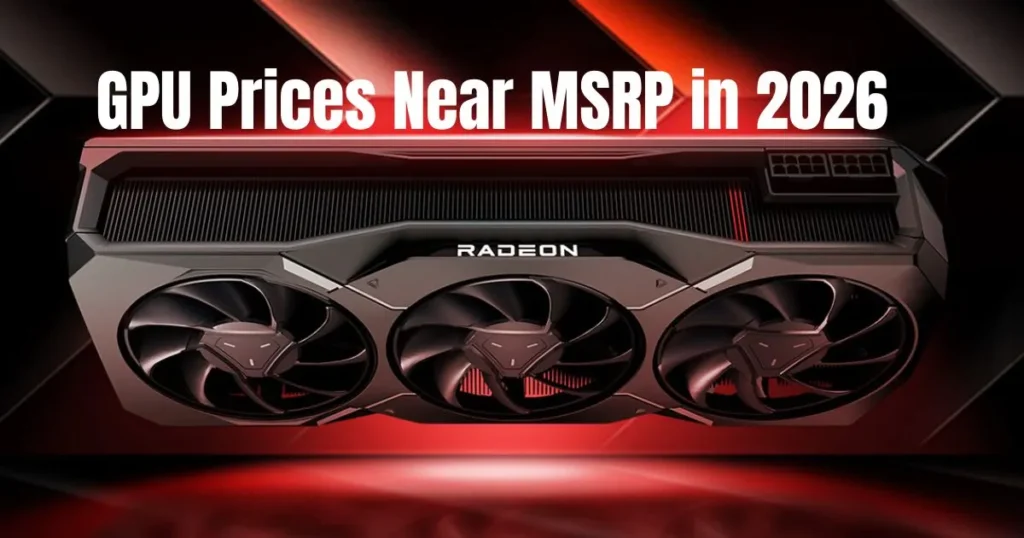
This direct acknowledgment highlights the immense pressure memory shortages are placing on the entire PC ecosystem, moving beyond just NVIDIA’s realm and affecting all players.
The Core Challenge: Unpredictable Memory Economics
David McAfee, AMD’s Corporate Vice President of the Client Channel Business, stated plainly that the volatile DRAM market is the primary constraint. “We cannot predict where memory pricing goes next,” McAfee admitted, noting this uncertainty makes it difficult to make firm promises for the retail market.
The cost of memory chips is a significant portion of a graphics card’s total bill of materials. When those prices spike—driven by massive demand from the AI sector and constrained supply—manufacturers and board partners are forced to either absorb the cost or pass it on to consumers, often resulting in street prices that far exceed the official MSRP.
AMD’s Counter-Strategy: Leveraging Partnerships and Planning
To combat this, AMD is activating its supply chain relationships. McAfee emphasized that the company has “very strategic partnerships over many, many years with all the DRAM manufacturers.” The goal is to secure not only the necessary supply volume but also favorable economics that can help stabilize the final cost of building a graphics card.
Furthermore, AMD stated it is working directly with its add-in-board (AIB) partners, like ASUS, Sapphire, and PowerColor, to “maintain prices close to what AMD suggests.” This collaborative approach is intended to create a unified front against inflationary pressures across the production pipeline.
The Current Market Reality: GPU Prices Near MSRP Remains Elusive
Despite these efforts, the interview acknowledged the existing gap between suggestion and reality. As an example, it pointed to the Radeon RX 9070 XT, which had a $599 MSRP in 2025 but rarely sold at that price, only approaching it much later in its lifecycle. A new custom model like the RX 9070 XT Taichi White is launching at $819—$220 above the original MSRP—illustrating the ongoing challenge.
The discussion also touched on Frame Generation technology, with McAfee noting AMD plans to move carefully with its FSR Redstone updates and prioritize community feedback to improve the feature over time.
Also, Read
- NVIDIA’s RTX 50 Strategy – Prioritizing High-End Cards in Each Memory Tier Amid Shortages
- AMD’s Next Driver is AI-Focused – Adrenalin Edition 26.1.1 to Include “AI Bundle” for Local Development
- GPU Maker Reveals Hidden Cost – Each HDMI Port Adds $1, Mostly in Licensing Fees
A Industry-Wide Struggle for Stability
AMD’s public stance reinforces that the pricing crisis is a supply-chain issue, not a problem unique to any one brand. While NVIDIA has reportedly cut GPU shipments and discontinued models, AMD is signaling a different tactic: using its partnerships to secure supply and plead for price stability.
For consumers, this means hope for more predictable pricing, but not necessarily a return to the low MSRPs of the past. In 2026, a GPU’s price may depend less on AMD’s initial suggestion and more on the complex, global economics of memory manufacturing.
Source: gizmodo