Anti-Lag No More: AMD Rebrands Latency Tech as “FSR Latency Reduction 2”
AMD has quietly rebranded another one of its technologies. Without any official announcement or fanfare, Anti-Lag 2 has been renamed to FSR Latency Reduction 2.0 —the latest in a series of unannounced branding changes that suggest the company is consolidating its software stack under a single FSR umbrella.
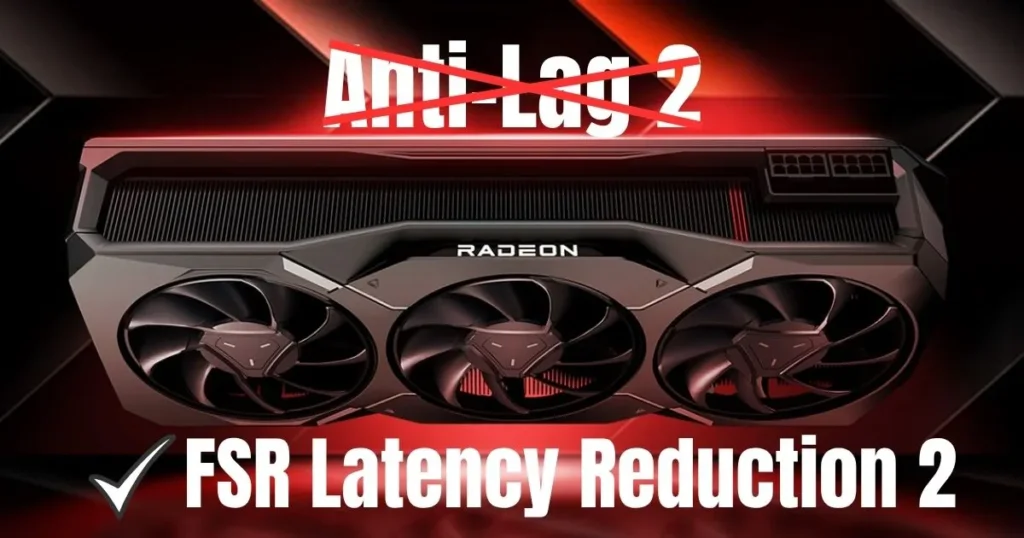
The change was spotted by eagle-eyed observers and confirmed through AMD’s developer materials. Anti-Lag 2, which first appeared in titles like Counter-Strike 2 and Overwatch 2, is designed to reduce input latency by synchronizing game engine processing with GPU rendering. Under its new name, the technology retains the same functionality but now carries the FSR prefix.
A Pattern of Quiet Changes
This is not the first time AMD has made a significant branding shift without a formal announcement. Last November, around the time of the Redstone (FSR 4) release, the company quietly renamed several FidelityFX technologies to simply “FSR.” FidelityFX Super Resolution became FSR Upscaling, Frame Generation gained the FSR prefix, and AMD introduced FSR Ray Regeneration and Radiance Caching alongside the Redstone launch.
Each of these changes was implemented with minimal public communication. Users and reviewers noticed the updates only after the fact, when AMD’s website quietly reflected the new naming.
Why the Change?
The move to fold Anti-Lag 2 under the FSR brand makes some sense given AMD’s evolving software strategy. FSR no longer refers exclusively to upscaling; it has become a catch-all umbrella for a suite of performance and image quality technologies. Frame Generation, Ray Regeneration, Radiance Caching, and now latency reduction all sit under the same banner.
For users, the change means that FSR-branded technologies now cover the full spectrum of performance optimization: upscaling, frame generation, ray reconstruction, and latency reduction. In theory, this creates a cohesive ecosystem where all features share a common identity.
The Redstone Problem
The branding push comes at an awkward time. Redstone—AMD’s FSR 4 implementation—remains the company’s slowest technology rollout to date. It is currently available in just two games, and even those implementations lack the full stack. Radiance Caching, for example, is not available anywhere despite being announced alongside Redstone.
For many users, the focus on renaming existing technologies while new features struggle to gain traction is a source of frustration. Anti-Lag 2 worked well under its original name; changing it to FSR Latency Reduction 2 does nothing to expand its game support or improve functionality.
Also, Read
- AMD Marks AM4’s 10th Anniversary, Says AM5 Will Follow the Same Long-Life Philosophy
- Nearly One-Third of Comments Under AMD’s 9950X3D2 Launch Video Ask for FSR 4 on Older GPUs
- Gamer Hits Jackpot: RTX 5060 Ti Found at Walmart for Just $80
What’s Next?
The new name does not yet appear on AMD’s public website, suggesting it will roll out with the next FSR SDK update. Whether the change will be accompanied by any functional improvements or expanded game support remains unclear.
For now, AMD’s software strategy appears to be in a state of transition: consolidating existing technologies under the FSR brand while Redstone adoption lags. Users hoping for broader FSR 4 support on older GPUs or faster game integration will likely see these branding changes as noise rather than progress.
Source: AMD