A PC builder’s excitement over a new high-end graphics card turned into a cautionary tale about online shopping risks. After ordering an ASUS Prime GeForce RTX 5080 OC 16GB from Amazon, the buyer unboxed what appeared to be a glaringly mismatched product: a graphics card with only a single 8-pin power connector. Community verification quickly confirmed the worst: this was not an RTX 5080, but a much less powerful RTX 5060 Ti that had been placed inside the flagship’s box with carefully swapped labels.
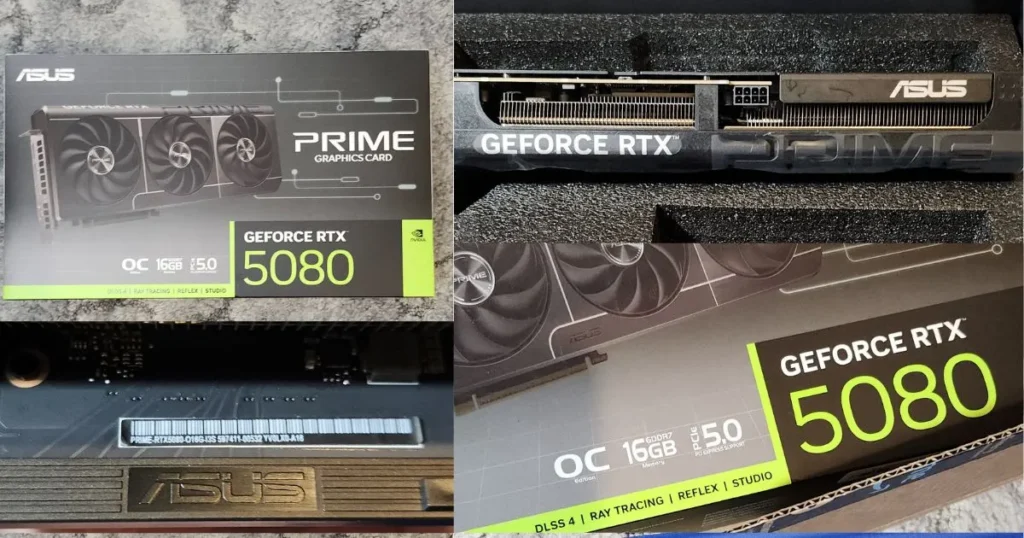
This incident exposes a troubling scam where fraudulent returns of downgraded components can slip back into retail inventory, sold as new to unsuspecting customers.
The Telltale Signs of a Switcheroo
The scam began to unravel immediately for knowledgeable enthusiasts. The buyer shared photos on Reddit, where the community identified several critical red flags:
- The Wrong Power Connector: All authentic ASUS Prime RTX 5080 models use a modern 16-pin 12V-2×6 power input and include an adapter for three 8-pin cables. A single 8-pin connector is a hallmark of lower-power, mid-range cards like the RTX 5060 Ti.
- Tampered Packaging: Close inspection showed the stickers on the card and box had been removed and reappeared, with edges no longer perfectly aligned or securely attached.
- Physical Mismatch: While both cards belong to ASUS’s “Prime” line, the cooler design and physical dimensions of the received card matched the 5060 Ti, not the larger, triple-fan 5080.
How This Scam Happens and Who It Hurts
This type of fraud typically follows a pattern: a scammer purchases a high-end product, carefully extracts the valuable component (the RTX 5080 GPU), and replaces it with a cheaper, often older or used item (the RTX 5060 Ti). They then reseal the packaging to look new and return it for a full refund.
The problem for legitimate buyers arises when retailers like Amazon restock these returned items without a thorough, technical inspection, inadvertently selling a fraudulent product as “new” to the next customer. The victim is left to navigate returns, delays, and frustration, while the scammer profits with a free high-end GPU.
Also, Read
- GPU Inflation Reaches New Peak – A Single RTX 5090 Now Costs Nearly as Much as a Complete Gaming PC
- ASUS Retracts Statement, Now Says RTX 5070 Ti Is Not Discontinued After All
- NVIDIA Reportedly Slashes GPU Supply by 20%, 2026 May See No New GeForce Cards
Protecting Yourself: Verification Tips for High-Value Purchases
This incident serves as a vital reminder for anyone buying expensive computer components online:
- Record Your Unboxing: Set up a phone or camera to record the entire unboxing process of any high-value item. This provides undeniable evidence if the product is not as advertised.
- Know the Key Specs: Before opening the box, research specific details of your purchase, like the correct power connector type, port layout, and cooler size. The 16-pin vs. 8-pin difference was the instant giveaway here.
- Inspect Seals and Labels: Look for any signs of tampering on the box seals, product stickers, or serial number labels. Misaligned or peeling stickers are a major warning.
- Buy from Authorized Sellers: Whenever possible, purchase directly from the manufacturer’s official store or authorized retailers to reduce the risk of encountering restocked fraudulent returns.
While Amazon and other major retailers generally have good return policies, preventing the hassle requires vigilance from consumers. As GPU prices remain extremely high, these components become bigger targets for sophisticated scams, making awareness your first line of defense.
Source: Reddit