NVIDIA’s DLSS 5 Trailer Gets Blocked by Italian TV Copyright Claim
Just when the DLSS 5 backlash seemed to be calming down, NVIDIA’s official announcement video ran into an entirely different kind of trouble: a copyright claim from an Italian television network.
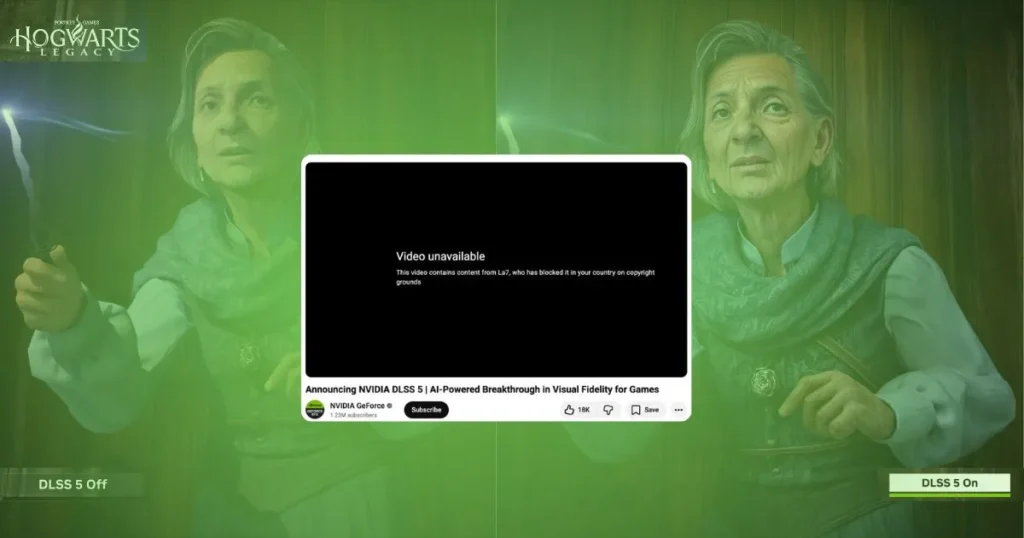
Users in several countries attempting to watch the DLSS 5 reveal on YouTube were met with a notice stating the video contained material from Italian broadcaster La7 and had been blocked on copyright grounds. The video had already amassed over 2.3 million views before the claim took effect.
How Italian TV Ended Up Claiming NVIDIA’s Footage
The situation is a case study in the absurdities of automated copyright enforcement. La7 allegedly aired footage from NVIDIA’s own DLSS 5 presentation on its network. Then, through YouTube’s Content ID system—which scans uploaded videos for matches against a database of copyrighted material—the broadcaster’s broadcast of NVIDIA’s presentation became the “reference” file. As a result, NVIDIA’s own original upload was flagged as infringing on La7’s claimed rights to the same content.
In other words, La7 broadcast NVIDIA’s presentation, and then YouTube’s system decided that NVIDIA was the one using copyrighted material. The result: the original creator’s video was blocked while a third-party rebroadcast of that content remained (presumably) unaffected.
A Broken System
The incident highlights long-standing criticisms of YouTube’s copyright enforcement mechanisms. The Content ID system is heavily automated, with little to no human review before a claim takes effect. This allows broadcasters, music labels, and other rights holders to file claims—sometimes erroneously—and have videos taken down or demonetized immediately. The burden then falls on the original creator to file a counter-notification and wait for resolution.
For a company like NVIDIA, with legal resources to handle such claims, the issue is an annoyance. For smaller creators, a wrongful copyright claim can mean lost revenue, disrupted content schedules, and weeks of administrative back-and-forth.
The Al Filter Angle
Adding a layer of irony, some observers noted that DLSS 5’s announcement video prominently featured AI-generated or AI-enhanced footage. Under current legal frameworks in many jurisdictions, AI-generated content may not be eligible for copyright protection at all—raising the question of whether anyone, including NVIDIA, could successfully claim exclusive rights to the video’s core visual elements.
That argument, while interesting, is unlikely to have any practical effect on YouTube’s automated systems. The platform’s copyright tools do not evaluate whether content is AI-generated before applying claims.
Resolution
As of the time of writing, the copyright claim appears to have been removed. The video is once again viewable in affected regions. NVIDIA likely filed a counter-notification or directly contacted La7 to resolve the issue.
Also, Read
- NVIDIA shows Neural Texture Compression cutting VRAM from 6.5GB to 970MB
- Intel Core 300 “Wildcat Lake” Leak Reveals 15W Mainstream Chips with Xe3 Graphics
- Memory Prices Finally Crack: DDR4 Sticks Drop $14 in a Single Day in China
The DLSS 5 video block is a minor but telling incident in the broader saga of automated copyright enforcement. A broadcaster rebroadcast NVIDIA’s own presentation, and YouTube’s system punished the original creator. The video is back online, but the underlying flaws in the system remain unaddressed.
Source: NVIDIA