NVIDIA has been making headlines with DLSS 5, but a separate presentation at GTC 2026 revealed something potentially even more impactful for gamers: Neural Texture Compression (NTC). In a live demo, the company showed a scene’s VRAM footprint dropping from approximately 6.5GB to just 970MB—an 85% reduction—while maintaining image quality nearly identical to the original.
How It Works
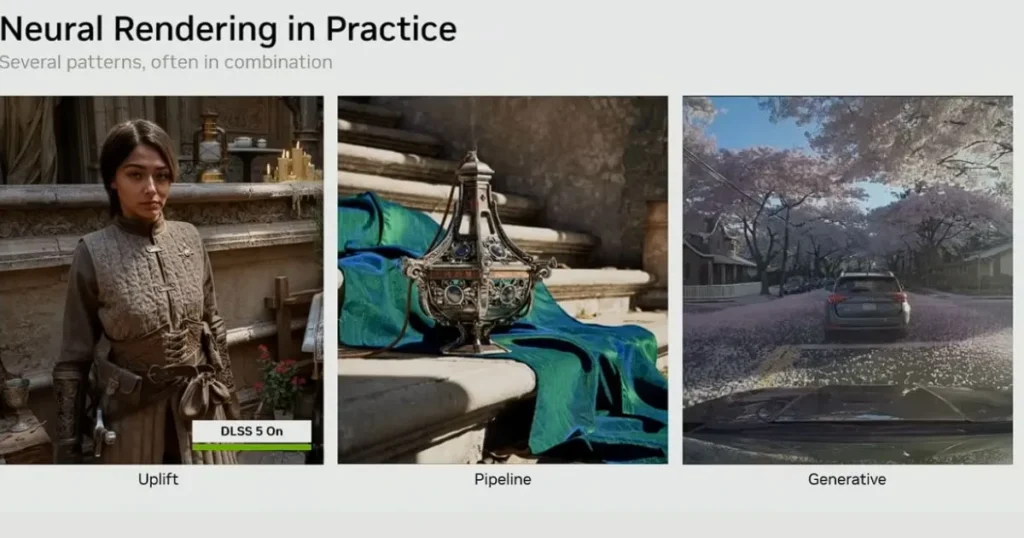
Unlike DLSS, which applies machine learning to the final rendered image, NTC uses small neural networks inside the rendering pipeline to decode textures, evaluate materials, and reduce memory traffic. Traditional block compression (BCn) has served games well for years, but it has limits. NTC compresses texture data into a compact latent representation, then decodes it on the fly with a lightweight neural network.
The result is striking: smaller VRAM usage, smaller game install sizes, smaller patches, and less download bandwidth. Developers could fill their worlds with far more detailed assets without requiring gamers to buy ever‑larger graphics cards.
Beyond Textures
NVIDIA also demonstrated Neural Materials, applying the same logic to material shading. A material setup that originally required 19 separate channels was reduced to just 8, with render times speeding up by 1.4x to 7.7x at 1080p in the test scene. This doesn’t invent new visuals—it stores and evaluates existing material data in a much lighter, faster way.
The DLSS 5 Controversy
DLSS 5 has faced criticism from some users and developers who labeled it “AI slop,” fearing it could push games toward a generic look or interfere with art direction. NVIDIA CEO Jensen Huang has already responded to those concerns. But neural compression technologies like NTC and Neural Materials offer a different, less controversial benefit: they optimize what’s already there, making games run better and take up less space without altering the artist’s intent.
Also, Read
- AMD Quietly Renames Anti-Lag 2 to “FSR Latency Reduction 2” in Latest Branding Shift
- Intel’s Arrow Lake Refresh Already Selling Above MSRP: $299 Chip Now $350
- Radeon RX 9070 XT Returns to Effective $699 Pricing—But Only With Bundled Extras
What This Means for Gamers
For PC gamers struggling with ever‑expanding install sizes (some now exceeding 150GB), NTC could be a game‑changer. For developers, it means more headroom to add high‑resolution textures without bloating system requirements. And for NVIDIA, it’s a reminder that AI in gaming isn’t just about upscaling or frame generation—it’s also about efficiency, compression, and smarter resource use.
The technology is still in the demo phase, but if implemented widely, Neural Texture Compression could make the next generation of games both more beautiful and more accessible.
Source: NVIDIA