NVIDIA Reportedly Brings GeForce RTX 3060 Back from Retirement, Samsung 8nm Production Resumes
In a move that underscores the strange state of the GPU market in 2026, NVIDIA is reportedly restarting production of its aging but beloved GeForce RTX 3060. According to a report from the Korean publication Hankyung, Samsung Foundry is preparing to manufacture the Ampere-based GPU once again using its familiar 8nm process. This would mark the return of a card originally launched in 2021, roughly two years after its production was initially wound down.
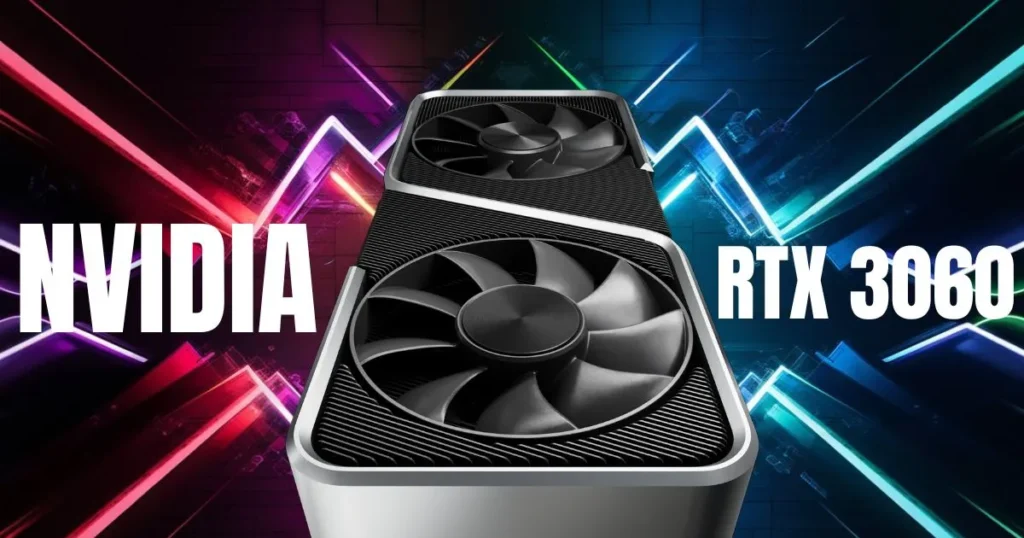
The news follows earlier rumors from Chinese supply chain sources suggesting NVIDIA might ship additional RTX 3060 units during the current quarter. While the company has not officially confirmed the plan, the consistency of reports from multiple outlets lends weight to the speculation.
Why Now? The Answer Lies in AI and TSMC’s Overflowing Orders
At first glance, reviving a five-year-old graphics card might seem like a head-scratcher. However, the rationale becomes clear when you consider the broader semiconductor landscape. NVIDIA’s most advanced GPUs—the RTX 40 and 50 series—are manufactured by TSMC. TSMC’s advanced nodes are currently stretched to their absolute limit, churning out high-margin AI accelerators like the GB200 and GB300 for data centers.
This capacity crunch leaves NVIDIA with a problem: how do you serve the budget and mid-range gaming market without diverting precious wafer starts away from the AI business? The answer appears to be leveraging Samsung’s mature and readily available 8nm capacity.
Samsung’s 8nm line is reportedly capable of processing 30,000 to 40,000 wafers monthly, representing about a tenth of its total production capacity. Crucially, this line is already active, producing chips for other clients like the Tegra SoC powering the Nintendo Switch 2. Spinning up RTX 3060 production is a relatively low-risk, high-reward way for NVIDIA to flood the market with “good enough” gaming GPUs without straining its relationship with TSMC or its most lucrative product lines.
Export Restrictions and the China Factor
Another significant driver is the complex geopolitical landscape. Stricter US export controls have made it difficult to ship top-tier AI accelerators to China. However, older gaming GPUs like the RTX 3060 fall outside these restrictions. Reviving this card provides NVIDIA with a legal and effective product to sell in the Chinese market, meeting both gaming demand and the needs of local AI developers looking for accessible compute hardware.
NVIDIA GeForce RTX 3060 – AMAZON
Which RTX 3060 Will It Be? And at What Price?
The biggest questions for gamers revolve around the specifics. The RTX 3060 lineage includes two distinct versions: the original 12GB model with a 192-bit bus, and a later 8GB version with a narrower 128-bit bus. It remains unclear which variant Samsung will produce, though the 12GB version’s larger memory pool arguably makes it more relevant for modern titles.
Pricing will be critical to the card’s success. The current-gen RTX 5060, which is roughly 45-50% faster, can be found for around $300. To be a compelling value, the revived RTX 3060 would need to be priced significantly lower, perhaps in the $200 range. If it lands closer to $250 or $300, its value proposition becomes questionable.
Some rumors also hint that the new cards could support DLSS 4.5, NVIDIA’s latest upscaling technology, which would help extend their competitive lifespan in modern games.
Also, Read
- AMD Launches Ryzen AI 400 Desktop APUs, But iGPU Tops Out at Radeon 860M
- AMD Ryzen 5 5500X3D Hits China for ~$175, Proving AM4 Still Has Plenty of Life Left
- Microsoft: Shader Execution Reordering delivers up to 90% higher performance on Intel Arc B-Series in tech demo
A Symptom of a Stalled Market
The return of the RTX 3060 is, in many ways, a symbol of a market under immense pressure. Soaring DRAM prices, AI’s insatiable hunger for silicon, and manufacturing bottlenecks are forcing even the industry leader to look backward for solutions. For consumers, this is a mixed blessing. It offers a potential lifeline of affordable GPUs in a time of scarcity, but it also signals that true innovation and ample supply at the entry-level may remain elusive for the foreseeable future.
Source: hankyung