AMD Radeon RX 9070 Series Turns One: A Year of Highs, Lows, and MSRP Woes
March 6, 2026, marks the first anniversary of AMD’s Radeon RX 9070 XT and RX 9070 launch. It has been a full year since Team Red introduced its RDNA 4 architecture to the desktop graphics market, and the occasion invites a look back at what the series delivered—and where it stumbled.
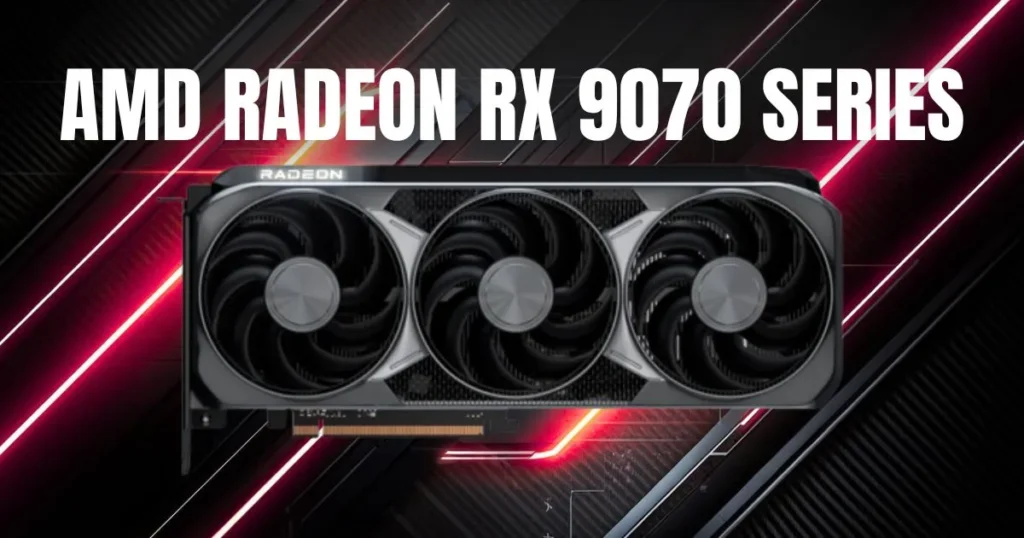
On paper, the launch looked promising. The RX 9070 XT arrived with 64 Compute Units, a boost clock reaching up to 2970 MHz, 16GB of GDDR6 memory on a 256-bit bus, and a 304W total board power. The non-XT RX 9070 offered 56 Compute Units, a 2520 MHz boost clock, the same 16GB/256-bit memory configuration, and a more power-efficient 220W TBP. Pricing was set at $599 for the XT and $549 for the standard model—competitive figures aimed squarely at NVIDIA’s mid-range offerings.
The MSRP Mirage
Where the series struggled was not in hardware capability but in retail reality. AMD and its executives repeatedly stated that MSRP pricing would be “encouraged,” but that message failed to translate into consistent street prices. Cards sold above suggested retail almost immediately after launch, and for months, finding an RX 9070 XT at $599 felt like a scavenger hunt.
It wasn’t until early November 2025—roughly eight months after launch—that the RX 9070 XT finally reached its official $599 MSRP with any regularity in the US market. Even then, the window of availability was narrow. As one observer noted, the timing coincided with memory prices beginning a slow descent, but the relief was temporary.
Reader reports continue to surface about difficulty securing RDNA 4 cards at reasonable prices, suggesting that supply and pricing challenges have lingered throughout the product’s first year.
The FSR 4 Exclusivity Debate
Perhaps the most contentious decision surrounding the RX 9000 series was AMD’s handling of FSR 4, internally codenamed “Redstone.” The Adrenalin 25.3.1 release notes explicitly stated that FSR 4 support was exclusive to Radeon RX 9070 series cards at launch. That exclusivity has persisted, with AMD’s supported games page now listing FSR 4 features for RX 9000 series cards only.
For a company that has long positioned itself as an advocate for open technologies and cross-platform compatibility, this decision rankled many in the community. Older Radeon generations—including the otherwise capable RDNA 3 lineup—remain locked out of the new AI-based upscaling path. The frustration was compounded by leaks months prior suggesting that RDNA 3-compatible libraries for FSR 4 existed, raising questions about why broader support was withheld.
AMD Radeon RX 90 Series
- AMD Radeon RX 9070 XT – (MSRP $599) – AMAZON
- AMD Radeon RX 9070 – (MSRP $549) – AMAZON
- AMD Radeon RX 9070 GRE – (MSRP 4199 RMB – China)
- AMD Radeon RX 9060 XT – (MSRP $349 (16GB), $299 – 8GB) – AMAZON
A Quiet Year Since Launch
After the initial March 2025 launch, AMD’s Radeon activity has been relatively subdued. The company added the RX 9070 GRE and RX 9060 models around May and June 2025, but no further RDNA 4 desktop GPUs have materialized since. Public-facing updates have largely been limited to driver notes, FSR game compatibility announcements, software blog posts, and game bundles.
This raises an open question: is AMD finished with RDNA 4 desktop updates? With no new gaming GPU launches in nearly ten months, enthusiasts are left wondering whether the company is saving its next moves for a potential refresh or shifting focus entirely toward next-generation architectures.
Also, Read
- AMD Ryzen AI 400 APUs Won’t Run Radeon RX 9000 GPUs at Full Speed, Tests Show 30% Performance Loss
- AMD Launches Ryzen AI 400 Desktop APUs, But iGPU Tops Out at Radeon 860M
- AMD Ryzen 5 5500X3D Hits China for ~$175, Proving AM4 Still Has Plenty of Life Left
The Bottom Line
One year in, the Radeon RX 9070 series stands as a mixed legacy. The hardware itself is solid—performance, efficiency, and feature set were all competitive at launch. But the execution around pricing, availability, and software strategy left a more complicated impression.
For those who managed to secure cards at or near MSRP, the RX 9070 XT and RX 9070 have delivered on their promise. For those who waited, watched prices climb, or felt left behind by FSR 4 exclusivity, the first year of RDNA 4 has been a lesson in tempered expectations.
As the graphics card market continues to evolve under pressure from memory costs and AI demand, the question now is what AMD’s next move will be—and whether the lessons of the RX 9070 series will shape a smoother path forward.
Source: AMD