“Cold as Ice”: Second Ryzen 9 9950X Dies on ASRock X870, Latest BIOS Fails to Help
The troubling saga of mysterious CPU failures on ASRock AM5 motherboards continues. Tech YouTuber Tech Yes City has reported a second Ryzen 9 9950X processor failing on the same ASRock X870 Steel Legend WiFi motherboard, and crucially, the latest BIOS update touted by ASRock to address boot problems did nothing to prevent or revive it.
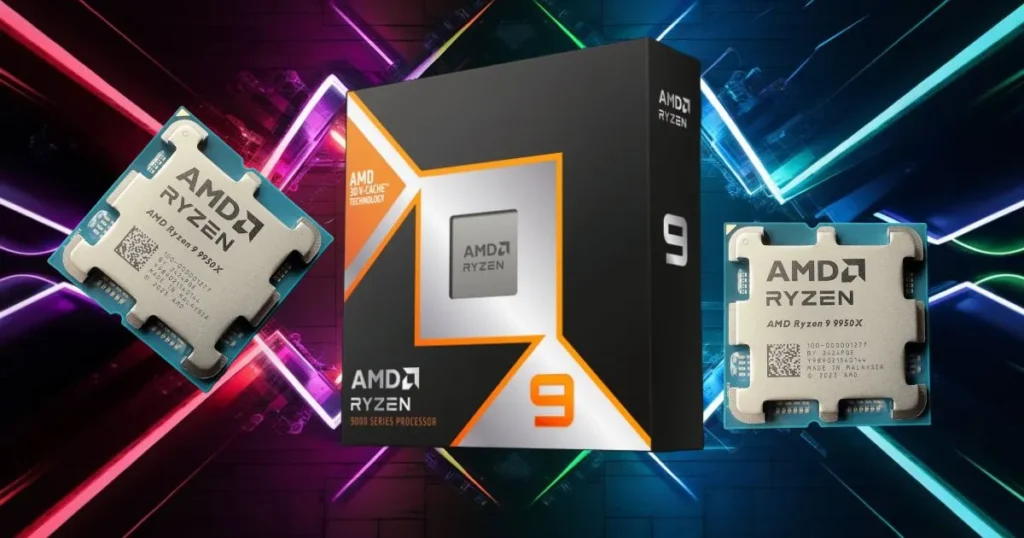
The affected CPU is described as completely “cold as ice” when power is applied—a phrase that evokes the classic song but describes a deeply concerning hardware state. A processor that remains cold at power-on typically indicates no power delivery, a short circuit, or internal failure that prevents it from drawing current.
ASRock’s Promised Fix
Earlier this month, ASRock began rolling out new AM5 BIOS updates in response to growing community reports of intermittent no-boot behavior and error codes across its motherboard lineup. The company integrated AMD AGESA ComboAM5 PI 1.3.0.0a into beta BIOS 4.07.AS01 and later into stable release 4.10.
The release notes specifically called out a fix for boot failures “on certain CPU configurations” alongside memory compatibility improvements. The update was positioned as a potential lifeline for systems that had stopped booting after a period of normal use, with ASRock suggesting it might restore functionality to seemingly dead processors.
A Second Failure, Same Pattern
Tech Yes City’s experience casts doubt on the effectiveness of that fix. According to the report, a second Ryzen 9 9950X died after approximately three to four months of use in the same ASRock X870 Steel Legend WiFi motherboard, under similar conditions to the first failure.
The YouTuber attempted to use the new BIOS update, referencing ASRock’s announcement and the possibility that it might revive CPUs stuck in a no-boot state. It did not. The processor still would not boot when tested in multiple other motherboards, confirming that the issue followed the CPU, not just the original board.
Unlike most users reporting problems on forums, Tech Yes City has access to a wide range of test hardware, making cross-board validation straightforward. The fact that the CPU remained non-functional across multiple platforms strongly suggests permanent failure rather than a temporary boot hang.
Not an X3D Chip
This case is particularly noteworthy because the affected processors are standard Ryzen 9 9950X units, not the X3D variants with 3D V-Cache that have dominated discussions in the ASRock subreddit megathread. While X3D chips appear disproportionately represented in community reports, this incident demonstrates that the issue may extend across the Ryzen 9000 lineup.
CPU Batch or Motherboard Batch?
Early speculation pointed to a specific batch of Ryzen CPUs as the root cause. However, Tech Yes City notes that the second failed processor came from an entirely different source than the first, making that explanation increasingly unlikely.
Instead, attention shifts to the motherboard. The consistent factor in both failures is the ASRock X870 Steel Legend WiFi. This suggests the possibility of a problematic batch of ASRock motherboards that may be contributing to, or directly causing, CPU failures through voltage irregularities, power delivery issues, or other undiagnosed behaviors.
The Mystery Deepens
Complicating the picture, other prominent reviewers have been unable to replicate the issue. Hardware Unboxed, for example, has tested similar configurations without encountering failures. This inconsistency points to a narrow failure window—perhaps specific to certain motherboard production runs, particular BIOS settings combinations, or interactions with other components.
For affected users, the situation remains frustrating. A BIOS update that promised to address boot failures appears, in at least some cases, to have no effect on genuinely dead CPUs. The “cold as ice” observation suggests a complete hardware failure rather than a recoverable firmware state.
Also, Read
- AMD Zen 6 Desktop “Olympic Ridge” Ryzen CPUs Reportedly Slip to 2027 Launch
- TAMD Zen 6 “Olympic Ridge” Ryzen CPUs Rumored to Pack Up to 24 Cores Across Seven Configurations
- Radeon RX 9000 Prices Tumble in Japan as Gamers Rebel Against High GPU Costs
What Users Should Do
For those running Ryzen 9000-series processors on ASRock AM5 motherboards, particularly X870 and X870E models, the recommended precautions remain:
- Ensure the latest BIOS is installed, but temper expectations about its ability to revive already-dead chips
- Monitor system stability closely, particularly during boot sequences and idle states
- Document any issues thoroughly, including error codes and behaviors
- Contact ASRock support immediately if problems arise
For now, the community awaits further investigation from ASRock and AMD. The fact that a second processor failed under similar circumstances, on the same board model, and remained cold after a BIOS update intended to address such issues, suggests that the root cause remains unidentified—and unresolved.