Radeon RX 9000 Prices Retreat in Japan After Gamers Push Back Against Inflation
The GPU market is witnessing a rare reversal. After weeks of steep price increases driven by the global memory shortage, AMD’s Radeon RX 9000 series is now seeing significant price declines in Japan—a direct consequence of cooling demand as consumers refuse to pay inflated prices.
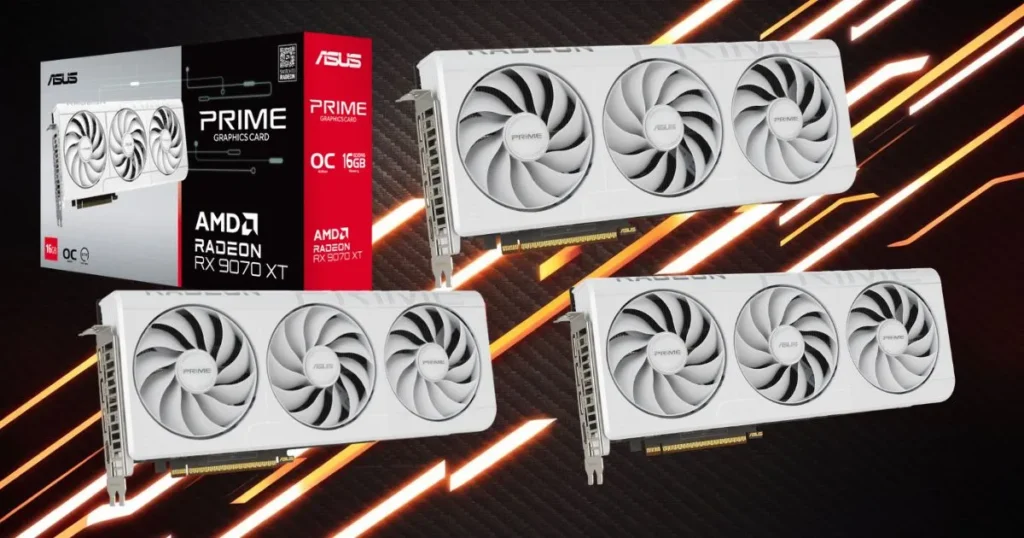
According to a detailed price-tracking report from Japanese outlet Gazlog, retail prices for RDNA 4 graphics cards climbed sharply in late December 2025 and January 2026, when buyers shifted to Radeon amid tighter NVIDIA GeForce supply. But the momentum has since evaporated.
RX 9070 XT: From ¥130,000 Peak to ¥108,000
The Radeon RX 9070 XT, one of the most popular models in the lineup, experienced the most dramatic swing. In late 2025, the card had a baseline with the lowest price around ¥95,000 and an average around ¥105,000. The market then peaked around January 15, 2026, with the lowest price hitting ¥130,000 and the average reaching ¥144,000.
As of February 19, 2026, those figures have retreated significantly. The lowest available price now sits at approximately ¥108,000, while the average price has dropped to roughly ¥124,000—a decline of about 15% from peak levels. In dollar terms, that’s a fall from around $840 to $770.
RX 9060 XT 16GB: A 20% Correction
The Radeon RX 9060 XT 16GB, positioned as a potential mid-range favorite, has seen an even steeper correction. Its baseline around November 2025 stood at roughly ¥50,000 for the lowest price and ¥56,000 for the average. The late-January peak pushed the card to approximately ¥78,000 lowest and ¥87,000 average.
Current figures show the card at about ¥67,000 lowest and ¥71,000 average. That represents a nearly 20% decline from the peak average price. In dollar terms, the card has dropped from approximately $562 to $458.
Why Prices Are Falling
The price corrections reflect a clear market signal: there is a threshold for how much price inflation gamers are willing to tolerate. When AMD’s RDNA 4 GPUs increased by around 30-40% in Japan, interest evaporated. Retailers, stuck with inventory that wasn’t moving, had little choice but to cut prices.
The RX 9000 series targets the budget and mid-range segments, where buyers are particularly price-sensitive. A $100 to $200 price increase—pushing cards toward $800—simply priced too many consumers out of the market.
The Memory Cost Constraint
Despite the welcome decline, experts caution against expecting a return to November 2025 pricing anytime soon. Memory pricing remains the key constraint on how far GPU street prices can fall. The global “RAMmageddon”—driven by AI infrastructure demand—has pushed DRAM and NAND costs higher, and those costs flow directly into graphics card pricing.
With the holiday shopping spree over and an overall PC hardware price increase affecting the market, many users are putting their upgrade plans on hold. This demand softness is likely to persist, potentially putting continued downward pressure on pricing.
Also, Read
- User Claims ASUS Motherboard Killed Two Ryzen X3D Chips—Including a Replacement 9850X3D
- AMD Ryzen 500 “Medusa” iGPU Leak Points to RDNA 4m and FSR 4 Support
- AMD’s Next-Gen “Medusa Halo” Chip Rumored for Massive Memory Boost with LPDDR6
What This Means for Buyers
For consumers in Japan, the current market represents an opportunity. Prices have backed off their speculative peaks, and cards are once again approaching—though not yet reaching—their pre-shortage levels.
Whether this trend spreads to other regions depends on local demand dynamics and supply conditions. But the Japanese market has sent a clear message: even in times of shortage, there are limits to what consumers will pay.
Source: gazlog